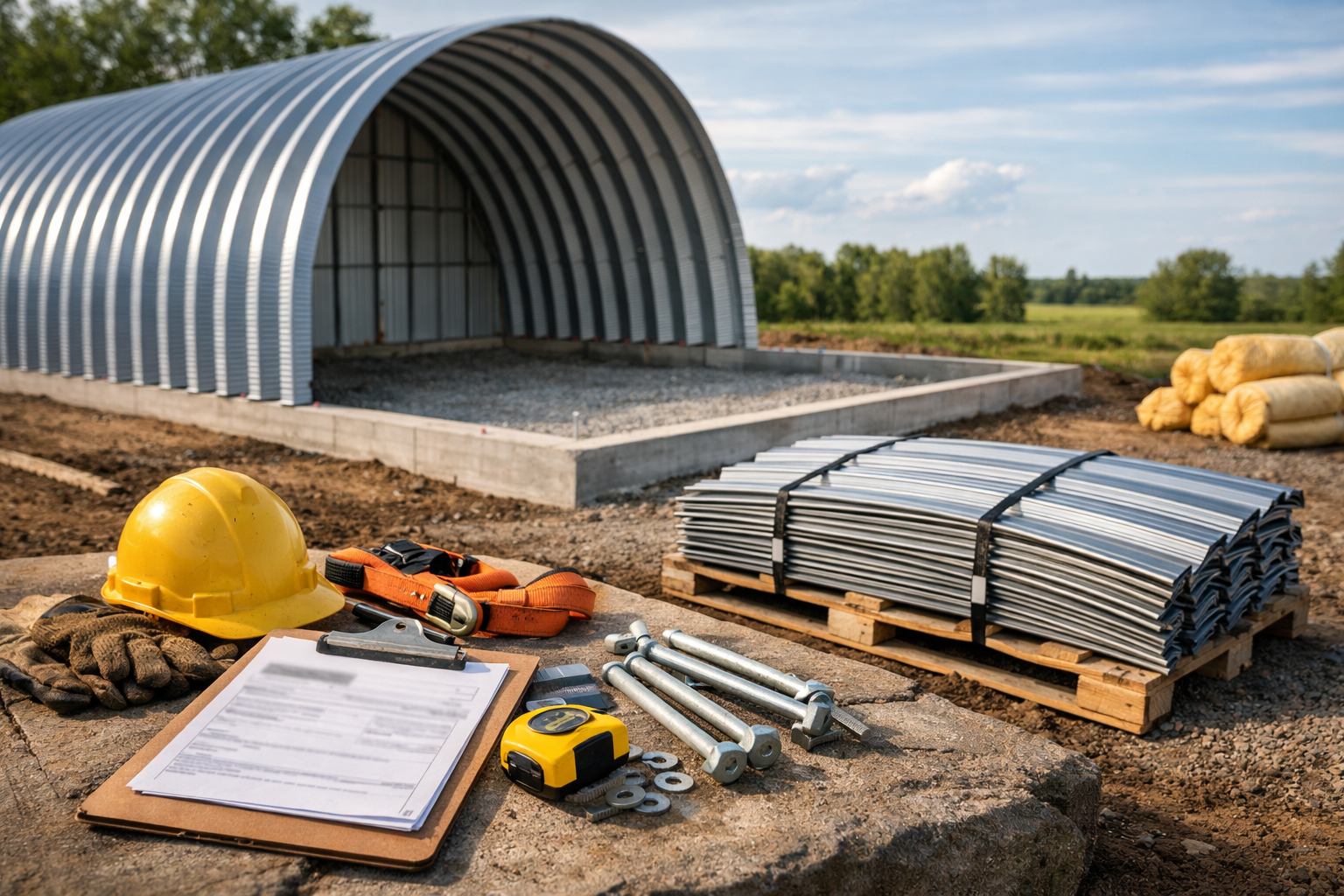
We broke ground on our farm storage Quonset last spring with a budget. By the time that last bolt was tightened, that budget had changed because we just didn’t understand how many different moving parts are involved in building a Quonset. The ultimate price was 28% above our initial estimate. That proved to be the most valuable lesson on how to compare Quonset building costs than any pamphlet could ever offer.
If you’re still in the planning phase, this is the article I wish I had read first.
What Makes Comparing Quonset Building Prices So Difficult?
After people begin to research steel arch building prices and prefabricated metal building cost, they often want a general price for the base kit of a top quality product. That number is true, though it’s almost never the whole story. The actual cost of a Quonset building is about how the many decisions that comprise your total building will work together and against each other.
To make a valid comparison of Quonset building costs from multiple manufacturers, sizes, and configurations, you have to know what’s in the quote and what isn’t. A $12,000 kit from one company might include anchors and end walls; a $9,500 quote from another may be steel panels only. The ability to read those differences is the first skill you need.
9 Things That Really Influence the Quonset Hut Cost
1) Building Size and Span Width
The dominant source of expense is size. Most Quonset buildings are sold by the square foot and as with most products, large orders can add up to discounts in price per square foot. But broader spans also require heavier gauge steel, and cost more in materials. Increasing from a 30-foot span to a 40-foot span on our farm storage build accounted for an 18% increase in base material cost just by itself.
2) Steel Gauge and Panel Thickness
All Quonset hut kits are not made from the same steel. Most standard residential and light commercial applications can use the 14-gauge corrugated panels, while a large or heavy commercial structure may need to be constructed out of 12-gauge material or heavier.
When budgeting for a Quonset building project, make sure to ask the manufacturer what gauge is being quoted and whether local wind or snow load conditions necessitate an upgrade. To comply with county code, we needed a thicker gauge of metal, which added about 6 percent to our total cost.
3) Foundation Type and Site Preparation
Here’s where lots of first-time buyers end up getting surprised. The Quonset kit itself will rest on a foundation, and that foundation can be as basic as a gravel pad secured with anchor bolts or as complex as a full concrete perimeter footing.
The logistics can be quite complex. In our case, we had extensive site work that needed grading and we poured a concrete foundation, which cost more than our steel kit. Soil type, site conditions, and local building codes all determine what kind of foundation you require.
4) End Walls: Included or Extra?
Quonset buildings have rounded sides and flat end walls, which are also frequently available for sale separately. Some kits include engineered end walls; others offer them as add-ons.
End walls can come with framed door openings, windows, and walk-through doors, all adding cost. If you are looking to compare Quonset building prices from different manufacturers, this is one of the biggest price variances out there.
5) Insulation Requirements
If you are using your Quonset for livestock housing, equipment storage with temperature-sensitive machinery, or anything else climate-controlled, insulation becomes a major line item and one of the key factors affecting Quonset building cost. If installed well, spray foam insulation is typically the best insulating material for curved metal structures, but it costs more than fiberglass batt alternatives. We compromised with a hybrid setup, and our budget still ended up over $4,000 on a mid-sized building.
6) Local Permit and Engineering Fees
There are only a few things that can influence the price of Quonset buildings that often go unnoticed, one of which is the permit. It may require stamped engineering drawings, a building permit, inspections at several stages, and sometimes permission to deviate from the zoning.
These fees vary wildly by area and may be hundreds or thousands of dollars. Before you finalize your budget, always get in touch with your local building department.
7) Delivery and Freight Costs
Quonset kits are bulky. They arrive in a bundle of steel panels, hardware, and anchors. All shipping fees must be paid and are offered based on your proximity to the manufacturer and the total volume of freight necessary.
Freight makes up an additional 5 to 12% for buyers in rural or remote locations. Receiving a freight quote prior to completing your supplier comparison will prevent sticker shock when you check out.
8) Labor and Installation Costs
A few buyers prefer to self-erect their Quonset packages, which can save big money. But it does take some grunt work, a bit of mechanic’s finesse, and several sets of hands.
Professional installation generally costs $3 to $6 per square foot depending on where you live and your site’s complexity. For our farm project, we contracted with a local builder to lay the foundation and do the end wall work, but constructed the panels ourselves. This hybrid approach was cost-effective and still produced a high-quality result.
9) Accessories and Add-Ons
The final price is affected by skylights, ventilation systems, cupolas, additional doors, and custom colors. These may be small in isolation but quickly add up.
Draw up a list of all the features you want before asking for a quote, so you’re comparing apples to apples between different suppliers.
How to Plan Your Quonset Project Budget the Correct Way
When budgeting your Quonset project, break it down into three parts: materials, site work, and finishing. Keep getting quotes for each stage instead of relying on a single all-in estimate.
Start talking to local contractors early to get an estimate on what site preparation will run you in your area, and get itemized quotes from at least 2 to 3 Quonset kit manufacturers.
Also work a contingency buffer into the plan. Industry experience would suggest that about 10 to 15% over your rough estimate is a reasonable cushion to cover the unknowns of a first new construction build. That cushion is what soaks up the surprises, like a soil test that uncovers clay, a county demanding upgraded anchors, or a shipping delay that takes a week of contractor time.
Final Thoughts
Our 28 percent cost overrun wasn’t a matter of bad planning so much as incomplete planning. We knew the price of steel. We failed to consider the land below it, the permits above it, and the add-ons around it, all critical details when planning a Quonset project budget properly.
If you truly want to protect and maintain your Quonset investment, begin by looking at the whole picture, not solely the price of a kit. The elements that determine the cost of a Quonset are predictable in advance. You just need to be asking the right questions before that first panel goes up.
Frequently Asked Questions
How much does a Quonset hut cost per square foot?
The price comparison between Quonset and C-Channel varies by dimension and number of planes or gables, as well as local labor rates. Expect roughly $12 to $30 per square foot installed. The kit alone can easily run $6 to $16 per square foot before installation and site work.
What is the cheapest Quonset building size?
Mid-range 20′ to 40′ spans are typically the best value in terms of cost per square foot for agricultural, farm, or personal storage. Opting for a smaller structure doesn’t necessarily translate to spending less per square foot when you factor in fixed costs like permits and foundation work.
Can I erect my own Quonset hut?
Yes, quite a few Quonset kits are suited for owner-assembly and require only simple tools and a small team. Many arch buildings are designed with straight or tapering legs connected through purpose-built connections.
That said, the foundation and end wall framing are usually best handled by a licensed contractor to meet code.
Are Quonset buildings a good investment?
Metal buildings usually age advantageously. They are durable and relatively low maintenance. A correctly installed Quonset with a solid foundation should last 40 years or more, so the long-term cost is often very competitive compared to conventional structures.
