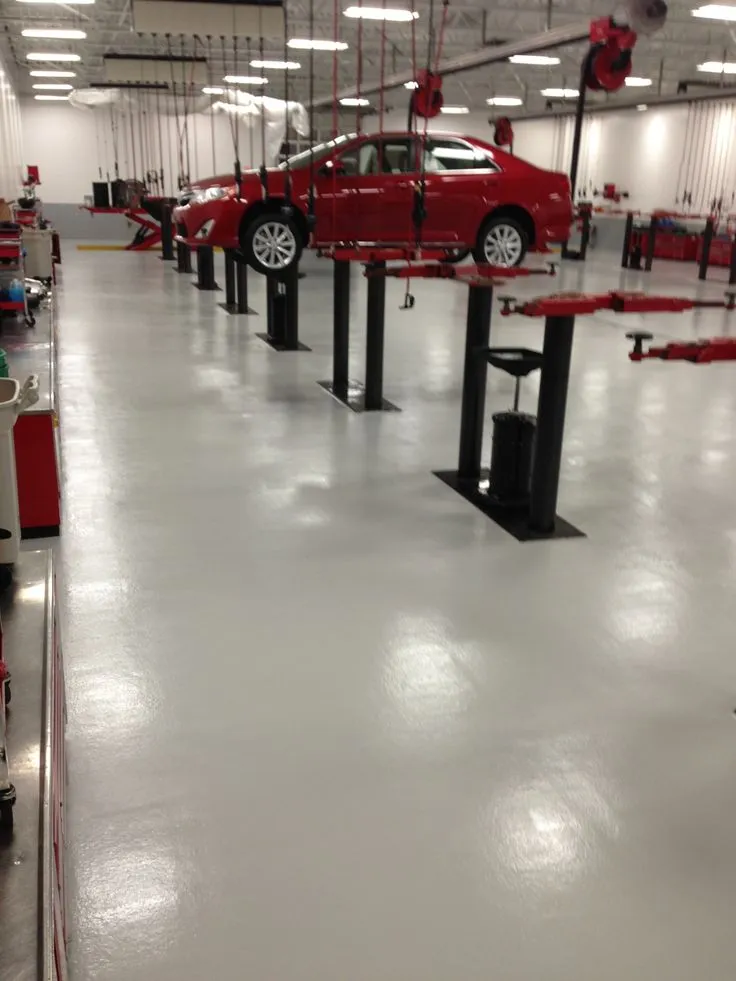
An automotive repair workshop depends on surfaces that can accommodate vehicles, tools, lifting equipment, and frequent maintenance activities. Unlike a showroom, the service bay regularly encounters automotive fluids, dropped components, and repeated movement around parked cars. Selecting suitable commercial epoxy flooring involves understanding these demands before choosing a material or decorative finish. Workshop owners should consider chemical exposure, cleaning practices, surface traction, and the condition of the existing concrete. A well-planned flooring project can support daily operations without assuming that every protective coating performs equally well under demanding automotive conditions.
Study the Workshop’s Daily Activities
A tire shop, vehicle detailing business, and mechanical repair facility may share similar equipment but place different demands on their floors. Tire shops experience repeated wheel movement, while mechanical workshops may regularly handle oil and other fluids.
Observe which areas receive the most wear. Vehicle entrances, lifting stations, tool storage areas, and equipment turning points may need particular attention. Documenting these patterns helps establish an appropriate flooring specification.
Understand Automotive Chemical Exposure
Vehicle maintenance involves substances that can affect certain coatings. Engine oil, coolants, brake fluids, cleaning solvents, and degreasers have different chemical properties and exposure risks.
Before choosing materials, identify the products used in the workshop and how often spills occur. Contractors should review relevant chemical resistance data rather than promise universal protection. Prompt spill cleanup remains important even when a coating offers suitable resistance.
Consider the Demands of Heavy Equipment
Vehicle lifts, tool cabinets, compressors, and rolling equipment can introduce concentrated loads and repeated movement. The underlying concrete must be suitable for these activities independently of the decorative coating.
Lifting equipment requires appropriate structural anchoring and installation. A resin coating does not increase a slab’s load-bearing capacity or correct unsuitable concrete foundations. Equipment manufacturers and qualified professionals should establish relevant structural requirements.
Compare Coating Specifications Carefully
Businesses researching epoxy commercial flooring should examine what each proposed system includes. A penetrating primer, epoxy base, decorative aggregate, and protective topcoat may have different roles.
Coating thickness and surface texture should be selected for expected operating conditions. Some polyaspartic systems provide useful UV stability, while other resin formulations may be chosen for particular chemical or mechanical demands. Technical specifications matter more than general product labels.
Plan Surface Traction Around Work Areas
Workshop employees frequently move between vehicles, workbenches, and equipment. Oils, water, and cleaning solutions can create slipping hazards on unsuitable surfaces.
A textured finish may improve grip in selected areas. However, excessively rough surfaces can complicate cleaning and the movement of small wheeled equipment. The chosen texture should balance traction with daily practical needs.
Identify Requirements Before Installation
A site inspection should consider both the condition of the concrete and the equipment already installed. Old coatings, damaged joints, contamination, and moisture may affect preparation requirements.
Useful questions include:
- Does the slab contain active cracks or damaged sections?
- Which existing coatings require removal?
- What automotive chemicals contact the floor?
- How will heavy equipment be protected or relocated?
- When can vehicle traffic safely resume?
These questions can reveal costs and scheduling concerns before a project begins.
Manage Renovation Without Losing Access
Closing an automotive workshop can interrupt scheduled repairs and customer appointments. Flooring work should therefore be coordinated with vehicle bookings, deliveries, and equipment access.
Some larger facilities may be able to complete improvements in separate sections. However, grinding, coating application, ventilation, and curing create temporary restrictions. Managers should establish safe working boundaries and reopening requirements with their contractor.
Think About Cleaning Equipment and Procedures
Workshop cleaning often involves more than ordinary sweeping. Degreasers, mechanical scrubbers, and frequent spill removal may be part of daily maintenance.
The selected system must be compatible with these procedures. Cleaning staff should receive product-specific instructions, including restrictions on chemical concentration and abrasive tools. Suitable spill-control procedures should remain in place after installation.
Plan for Future Repairs
Even correctly installed coatings may develop damage from repeated impacts or demanding equipment movement. Workshop owners should identify how localized repairs will be handled and whether matching materials can be obtained.
Inspect lifting areas, entrances, and frequently used pathways periodically. Keeping maintenance records makes it easier to identify recurring problems and determine when a professional repair is appropriate.
Conclusion
Automotive service bays require flooring decisions based on working conditions rather than appearance alone. Chemical resistance, equipment loads, traction, concrete preparation, and cleaning procedures all influence the suitability of a coating system. Workshop owners should compare technical specifications and coordinate installation with their operating schedules. For automotive businesses exploring commercial concrete flooring improvements across Greenville and surrounding Carolina communities, carolinaflooringspecialists.com provides information about epoxy and polyaspartic applications. Thoughtful preparation and consistent maintenance can help create a practical workshop environment that supports regular vehicle service and equipment movement.