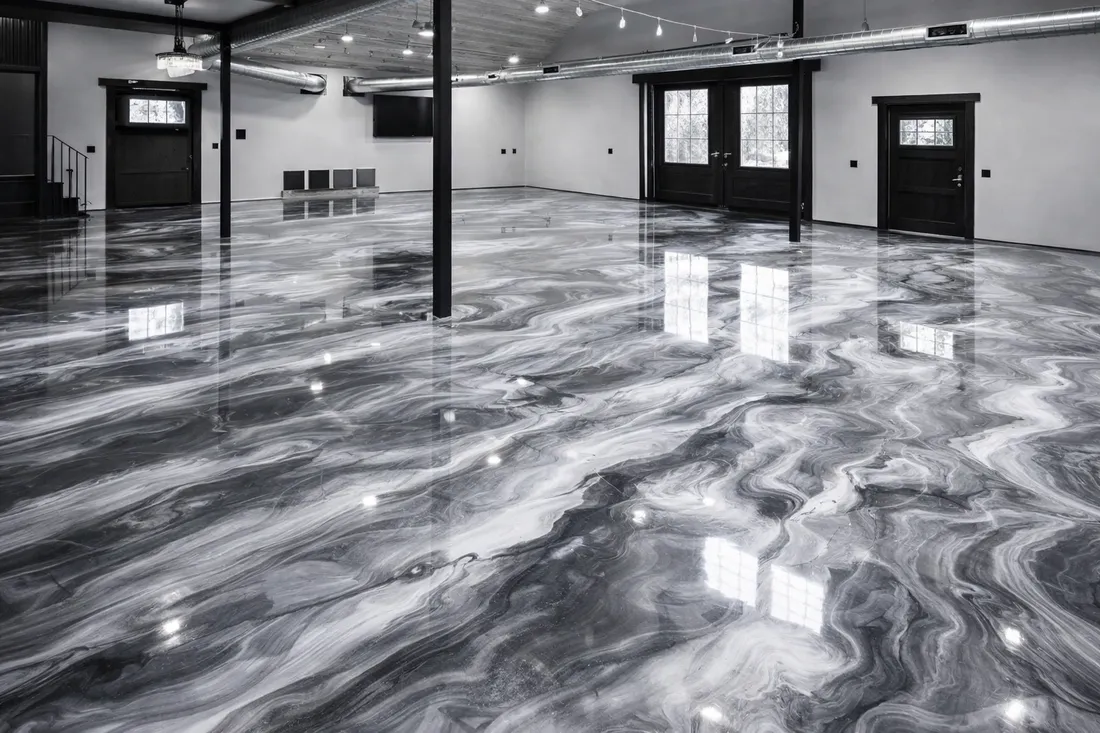

On a free Saturday, an epoxy floor can look like the perfect home improvement project. The kit is on the shelf, the video makes it look easy, and the price seems friendly. Then comes the reality of dust, fumes, timing, and a surface that does not behave like the demonstration. This article compares both paths honestly so you can decide where your effort and money are best spent.
What Is Really Inside the Box
Most retail kits contain a thinner, water-based or low-solids product with a small bag of decorative chips. These materials are formulated to be forgiving and easy to roll. The trade-off is film thickness, which is far lower than what trade-grade systems deliver.
Thin films scratch sooner and resist chemicals less effectively. They can look fine for a season and then show wear in tyre paths and workbench areas. Reading the coverage rate on the label helps, because a very large coverage figure usually means a very thin layer.
Where the Preparation Usually Goes Wrong
Preparation is the stage most amateurs underestimate. Acid etching, the method many kits recommend, rarely creates the deep, even profile that a diamond grinder produces. Uneven etching leaves weak spots where the coating can later peel or bubble.
Contamination causes problems too. Old oil, sealers, and even invisible curing compounds can block adhesion. Professionals test, degrease, and grind the slab until it is clean and open. A homeowner without those tools often discovers the flaw only after the floor has already failed.
Choosing a Garage Floor Coating Wisely
A garage floor coating faces tougher conditions than a living space, including hot tyres, dripping fluids, and temperature swings. Hot-tire pickup, where soft film lifts under warm rubber, is a classic failure of lightweight products applied to poorly prepared concrete.
Ask how the system handles those stresses. Trade-grade options often combine a penetrating primer, a thicker body coat, and a hard topcoat, each matched to the demands of vehicle traffic. Comparing the complete system, rather than just the headline product, gives a fairer picture of value.
Time, Weather, and Working Windows
Resin does not wait for you to finish a snack. Once mixed, the clock starts, and a single person rolling a large floor can easily run out of working time. Lapped edges and roller marks appear when the material begins to set mid-pass.
Temperature and humidity change the schedule. Cool slabs slow the cure, while humid days can cloud the surface. Professionals monitor surface temperature and dew point before starting, and they bring extra hands so every section gets finished within the window.
Counting the Real Costs
DIY looks cheaper until you add equipment hire, extra materials, lost time, and the cost of fixing mistakes. Grinder rental alone can narrow the gap. A failed floor that must be stripped and redone usually costs more than a professional job would have in the first place.
Professional pricing buys more than labour. It covers experience, tested materials, insurance, and a warranty to stand behind the work. Ask for written details so you can compare the scope of each quote and not just the bottom line.
When DIY Still Makes Sense
Small, low-traffic areas can suit a careful homeowner, such as a laundry corner, a shed, or a hobby room. If the slab is sound, dry, and clean, and you are patient with preparation, a modest project may turn out well. Expect to learn as you go.
Be honest about your limits. If the area is large, damp, cracked, or subject to heavy vehicles, bringing in a professional is the safer investment. Starting with a free site assessment costs little and can clarify whether your plan is realistic.
Conclusion
The choice between a kit and a professional job comes down to preparation, thickness, working conditions, and long-term cost. Light-duty spaces may suit a careful weekend effort, while demanding areas reward proper tools and experience. Think beyond the shelf price and match the approach to how hard the floor will work.
For help weighing your options and understanding what a lasting finish involves, visit johnsonsflooring.com.au and talk through your project with a specialist.