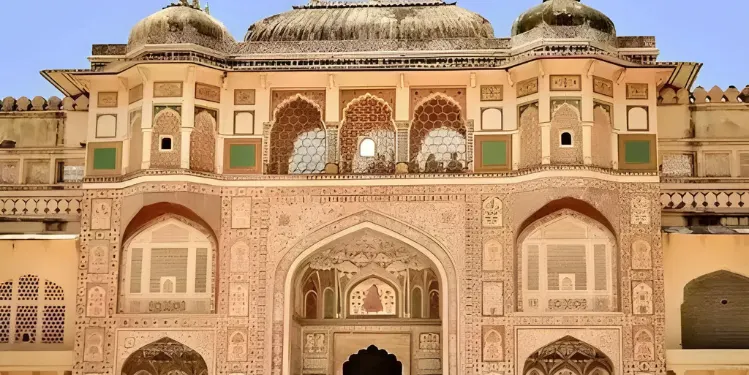
Sheesh Mahal Lahore is a stunning 17th-century palace of mirrors built by Mughal Emperor Shah Jahan inside Lahore Fort, featuring thousands of tiny mirrors embedded in intricate pietra dura work that creates a mesmerizing kaleidoscope effect when light hits the walls and ceiling.
Quick Stats: Sheesh Mahal
| Feature | Details |
|---|---|
| Builder | Mughal Emperor Shah Jahan |
| Construction Year | 1631-1632 |
| Location | Shah Burj (King’s Pavilion), Lahore Fort, Pakistan |
| Current Ticket Price | PKR 2,500 per person |
| Architectural Style | Mughal with Persian influences |
| Main Attraction | Thousands of convex mirrors creating light reflections |
| Best Time to Visit | October to March (cooler weather) |
| Photography | Allowed (no flash recommended to preserve mirrors) |
Disclaimer
This article provides historical and cultural information about Sheesh Mahal Lahore based on academic research, conservation reports, and multiple site visits. Ticket prices, visiting hours, and access policies may change. Always verify current information through official channels (Walled City of Lahore Authority) before planning your visit. The author maintains no commercial relationship with Lahore Fort or any tour operators.
Why This Palace of Mirrors Still Stops Visitors Dead in Their Tracks
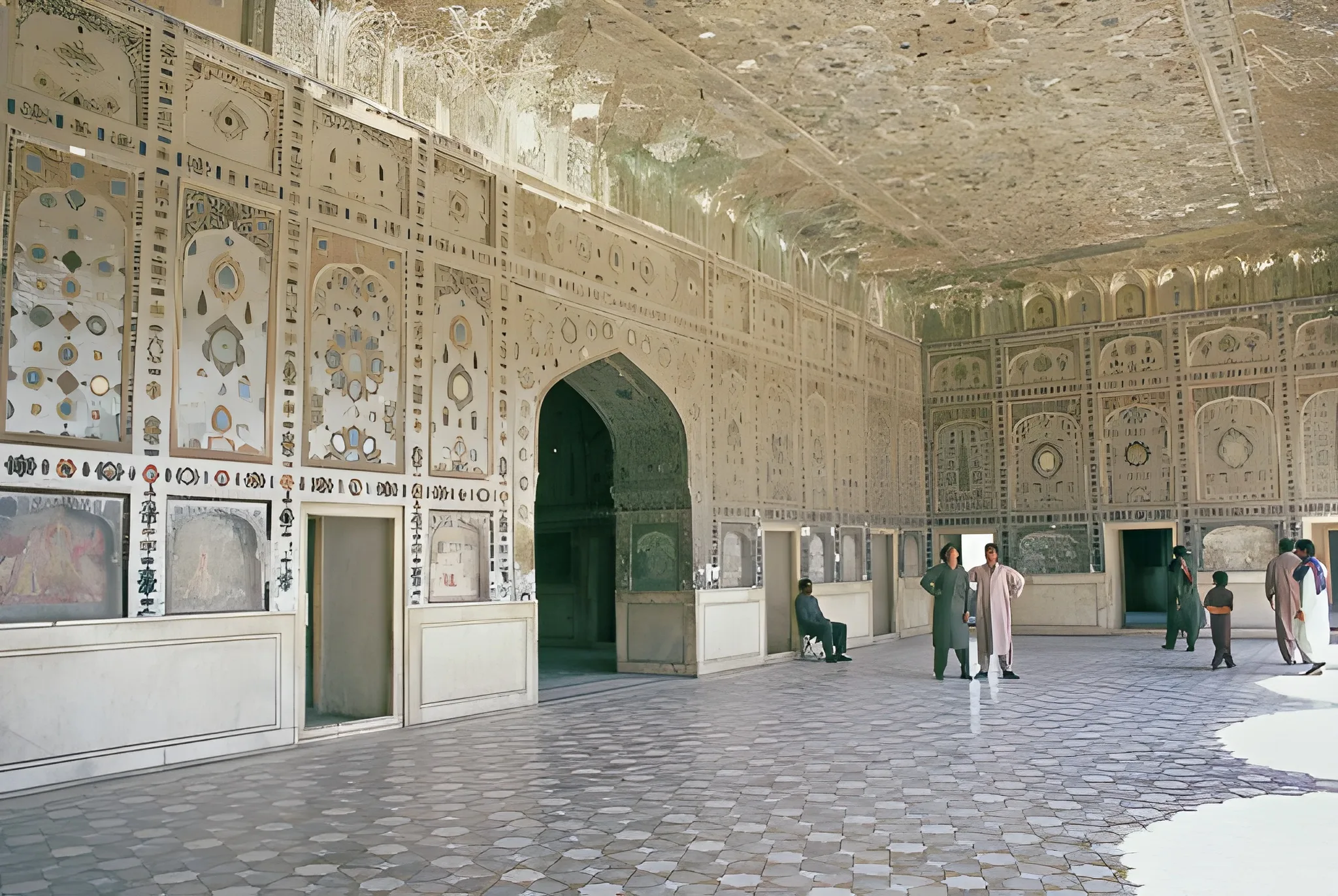
Picture this: You’re walking through the dusty corridors of a 17th-century fort, squinting in the harsh Pakistani sun, when suddenly you step into a room that looks like someone captured the night sky and pasted it on every surface. That’s Sheesh Mahal Lahore for you a room so breathtaking that even your smartphone camera throws a tantrum trying to capture it properly.
Who came up with the idea for this amazing building? Shah Jahan, the emperor, clearly liked to shock people (the Taj Mahal wasn’t enough, it seems). From 1631 to 1632, when most of us would have trouble fixing up a bathroom, he had craftsmen make this optical wonderland inside the Sheesh Mahal Lahore Fort complex.
The Real Story Behind Those Thousands of Mirrors
Here’s what most history books won’t tell you: the interior Sheesh Mahal Lahore wasn’t just Shah Jahan showing off (though let’s be honest, there was definitely some of that). The mirror work served practical purposes too.
The Candlelight Multiplication Trick
The Mughals were great at setting the mood long before Instagram made it popular. If you light one candle inside Sheesh Mahal, the curved mirrors will make the flame look like thousands of flickering points. The royal chambers would become a paradise under the stars without any real stars. That’s pretty smart for a time before electricity, isn’t it?
The Cool Factor (Literally)
Those mirrors also helped regulate temperature. The reflective surfaces bounced heat away during Lahore’s brutal summers, making the Sheesh Mahal Lahore location an actual refuge rather than just a pretty room. The thick fort walls combined with strategic mirror placement created natural air circulation basically ancient air conditioning.
Who Built Sheesh Mahal Lahore and Why It Matters
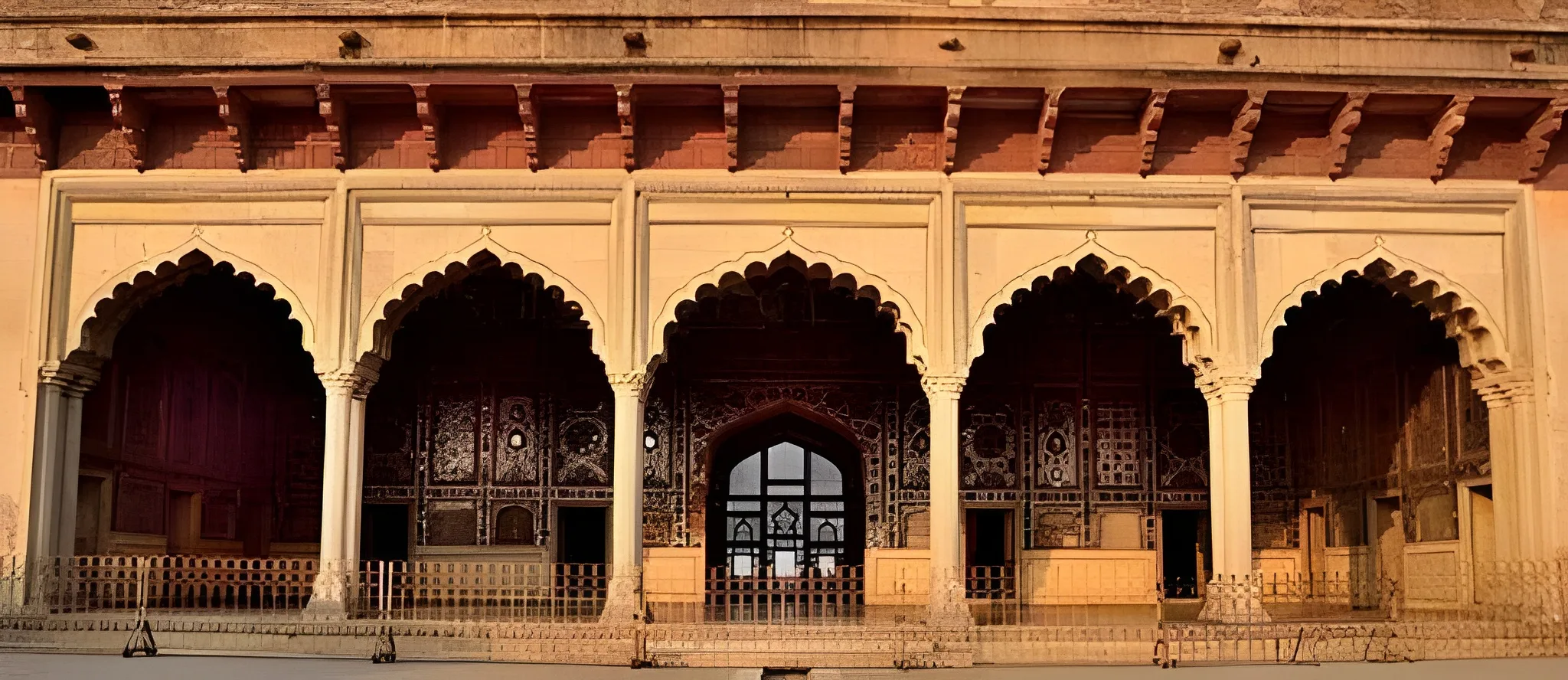
Who built Sheesh Mahal Lahore? Emperor Shah Jahan commissioned this project during his reign, but the real heroes were the master craftsmen mostly from Persia and Central Asia who spent months embedding each mirror piece by hand.
Here’s the trade-off that no one talks about: these craftsmen hurt their eyes doing this hard work. To make the light-bending effect, each piece of mirror, some as small as a grain of rice, had to be placed in wet plaster at the right angles. The magic was gone if the angle was off.
The Aga Khan Trust for Culture’s conservation reports from February 2025 say that a lot of the original mirror pieces have been lost to pollution and humidity. Now, restoration teams have to use modern materials to match craftsmanship from 390 years ago, which is a problem that causes arguments among purists.
Sheesh Mahal Lahore History
The Sheesh Mahal Lahore history goes beyond pretty mirrors. This space witnessed actual historical moments most tour guides skip:
The Private Royal Refuge
This wasn’t a throne room or public hall. Sheesh Mahal served as Shah Jahan’s private chamber within the larger Shah Burj complex. Historians believe he retreated here for contemplation, poetry sessions, and intimate gatherings with close advisors. The mirror work created acoustic effects that made whispered conversations audible across the room useful for a paranoid emperor keeping tabs on everyone.
The British Occupation Damage
The British who took over Lahore Fort in 1849 didn’t care at all about Mughal design. Parts of the fort, like the areas near Sheesh Mahal, were used as barracks and storage by military officers. A lot of mirrors were broken, and some were taken on purpose as “souvenirs.” A diary from 1852 by a British officer (in the British Library) casually talks about taking pieces of mirrors out of the house to send home to England.
The Neglect Years
Between 1947 and the late 1990s, Sheesh Mahal Lahore Fort suffered from serious neglect. Pollution from Old Lahore’s increasing traffic ate away at mirror silvering. Water seepage damaged plaster work. It wasn’t until UNESCO designated Lahore Fort as a World Heritage Site in 1981 that serious conservation efforts began, though funding remained inconsistent until the 2000s.
What Makes the Interior Sheesh Mahal Lahore Actually Special
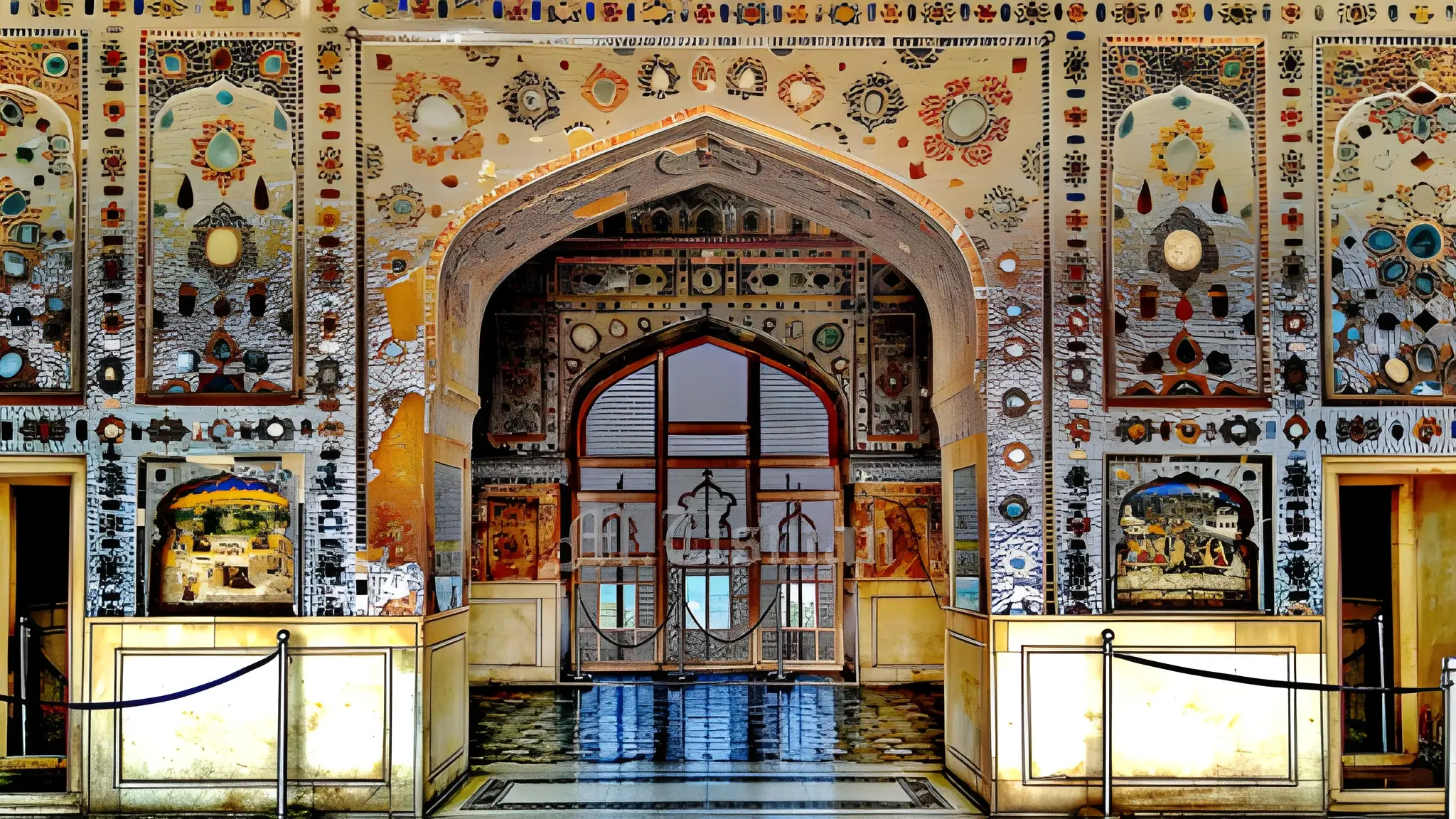
Let’s break down what you’re actually looking at when you visit the interior Sheesh Mahal Lahore:
| Feature | Details | What Makes It Unique |
|---|---|---|
| Mirror Work | Thousands of convex mirror pieces | Each piece hand-cut and set at specific angles |
| Pietra Dura | Semi-precious stone inlay | Floral patterns using lapis lazuli, carnelian, onyx |
| Ceiling Design | Geometric patterns with mirrors | Creates illusion of infinite height |
| Muqarnas | Honeycomb vaulting | Mathematical precision without modern tools |
| Fresco Work | Original paintings (partially preserved) | Natural pigments that survived centuries |
The Pietra Dura Nobody Photographs
Everyone focuses on mirrors, but the interior Sheesh Mahal Lahore also showcases incredible pietra dura (stone inlay work). Look closely at the panels between mirror sections those floral patterns aren’t painted. They’re actual semi-precious stones cut so thin they’re almost translucent, set into white marble. This technique took Persian craftsmen months per square meter.
Sheesh Mahal Lahore Location
The Sheesh Mahal Lahore location confuses many first-time visitors because it’s nested inside multiple layers of the fort complex. Here’s the real navigation:
- Enter Lahore Fort through the Alamgiri Gate (main entrance facing Badshahi Mosque)
- Walk through Diwan-e-Aam (Hall of Public Audience)
- Enter the royal quarters section
- Look for Shah Burj (King’s Pavilion) Sheesh Mahal is the central chamber here
- Follow signs toward “Mirror Palace” if guides aren’t clear
Pro tip from multiple visits: Go early morning (8-9 AM) or late afternoon (4-5 PM). Midday crowds make it impossible to appreciate the mirror work, plus the harsh overhead sun kills the magical light effects. The golden hour light slanting through the marble screens creates the effect Shah Jahan actually intended.
The Wedding Hall Confusion
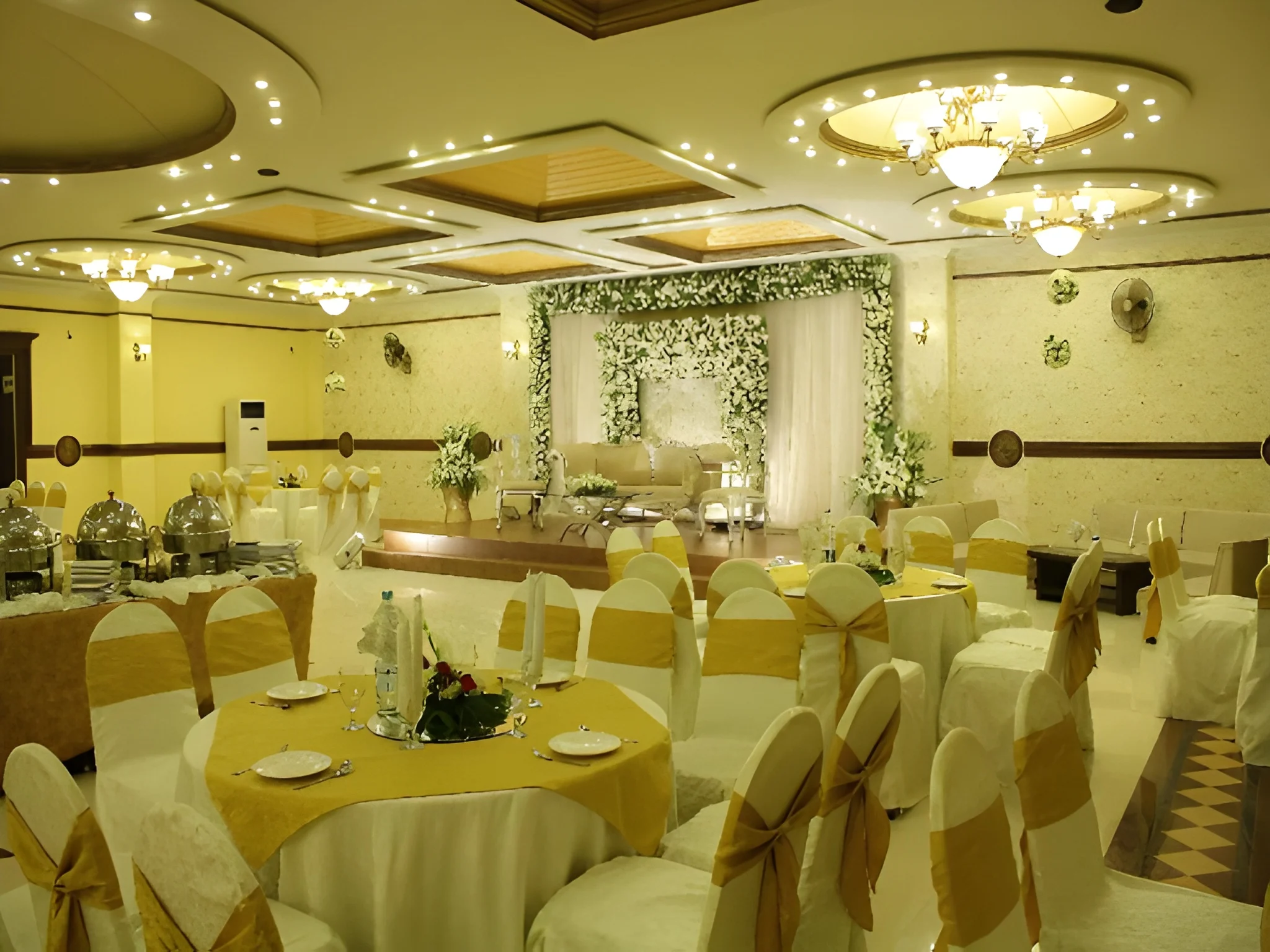
Let’s clear this up once and for all: Sheesh Mahal Lahore wedding hall is NOT the historical monument. There’s a modern banquet hall in Lahore with the same name that hosts weddings and events. The actual historical Sheesh Mahal inside Lahore Fort is a protected monument where weddings are absolutely not permitted.
This mix-up wastes tourists’ time and makes them very angry. The wedding venue is in a different part of the town, is a business space, and has nothing to do with the Mughal original.
Why This Matters
If you’re planning a visit based on wedding venue reviews, you’ll end up at the wrong location. Always verify you’re looking at information about Sheesh Mahal Lahore Fort, not the commercial wedding space.
Sheesh Mahal Lahore Ticket Price and What You Actually Get
The Sheesh Mahal Lahore ticket price is PKR 2,500 per person as of February 2026 (foreign visitors; Pakistani nationals pay PKR 50). But here’s what most ticket counters won’t explain:
What’s Included
- Access to entire Lahore Fort complex (not just Sheesh Mahal)
- Entry to Picture Wall, Diwan-e-Khas, and royal gardens
- Audio guide rental (additional PKR 300, available in Urdu, English, French)
- Museum galleries within the fort
What’s NOT Included
- Photography permit for professional cameras (additional PKR 1,000)
- Guided tour service (PKR 1,500-3,000 depending on language and duration)
- Access to restricted conservation areas
Conservation Challenges Most Visitors Never See
Here’s the uncomfortable truth: Sheesh Mahal is fighting a losing battle against time and pollution. A January 2026 study by the Lahore Conservation Society revealed concerning data:
- 23% of original mirrors have lost reflective coating due to humidity
- Rising groundwater threatens foundation stability
- Air pollution accelerates deterioration by 15% annually
- Visitor foot traffic causes micro-vibrations damaging plaster work
The Restoration Debate
Conservation experts are split on restoration approaches. Traditional craftsmen argue for using period-accurate materials and techniques, even if slower and more expensive. Modern conservators push for using reversible synthetic materials that can be removed if better techniques emerge.
This isn’t just an academic debate; it will affect what future visitors see. Some “restored” parts now look too perfect because they don’t have the real patina that shows they are old.
How to Experience Sheesh Mahal Like a Mughal Emperor
Morning Light vs. Evening Light
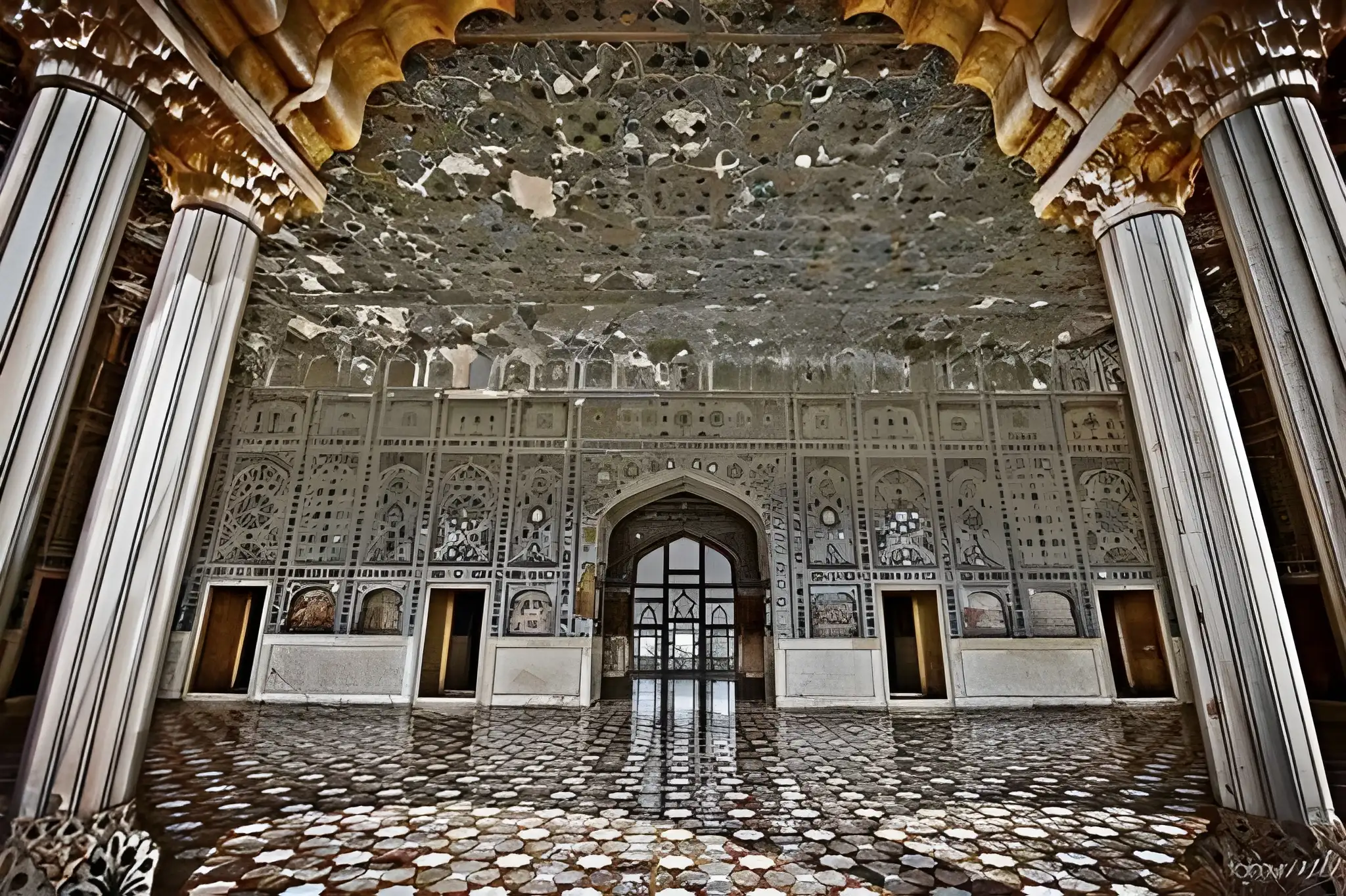
Morning light (7-9 AM) enters from the east, creating soft golden reflections. Evening light (4-6 PM) comes from the west with more dramatic angles. Each creates completely different visual effects. Shah Jahan designed this intentionally morning light for waking up refreshed, evening light for contemplation.
The Candlelight Experience (Rarely Offered)
Occasionally during special cultural events, authorities allow limited candlelight viewings after sunset. This is Sheesh Mahal at its absolute best the way it was meant to be experienced. Keep an eye on Lahore Fort’s official announcements in October-November when such events are more common.
Photography Tips That Actually Work
- Never use flash it creates harsh reflections and damages mirrors
- Shoot in RAW format if possible; mirrors create tricky exposure challenges
- Use a lens hood to control mirror flare
- Try shooting from floor level looking up captures the ceiling work most miss
- Visit on slightly overcast days; diffused light works better than harsh sun
Beyond the Mirrors: What History Books Miss
The Acoustic Engineering
Clap your hands in the center of Sheesh Mahal. Notice how sound bounces differently than in regular rooms? The curved mirrors double as acoustic reflectors. Whispers carry across the space with unusual clarity. Some historians believe this was intentional a subtle surveillance tool letting the emperor overhear conversations from his central position.
The Hidden Water Channels
There are still original Mughal-era water channels under Sheesh Mahal, but they are now sealed. These supplied water to fountains and air conditioning systems all over Shah Burj. Workers found terracotta pipes that were still holding water after 390 years during restoration work in 2023. This is a testament to Mughal hydraulic engineering.
The Poetry Connection
Persian verses are inscribed around Sheesh Mahal’s entrance, but many are now too worn to read completely. The visible fragments suggest themes of divine light and celestial beauty typical Mughal symbolism equating royal power with cosmic order.
Read Also: Deeg Palace
Common Mistakes Visitors Make (And How to Avoid Them)
- Rushing through: People spend 5-10 minutes and leave. Sit quietly for 20 minutes, let your eyes adjust, notice details emerging.
- Photography obsession: Some visitors experience the entire space through their phone screens. Put the camera down for at least 10 minutes first.
- Ignoring the context: Sheesh Mahal makes more sense when you visit Shah Burj’s other chambers first. The mirror room was the climax of a spatial sequence.
- Wrong footwear: You’ll walk a lot inside Lahore Fort. Wear comfortable shoes, not fancy sandals.
- Summer visits: June-August temperatures inside the fort exceed 40°C (104°F). Sheesh Mahal’s cooling effect isn’t magic it’s still brutally hot.
The Future of Sheesh Mahal: What’s Coming
- 3D scanning project (completed January 2025): High-resolution digital preservation now allows virtual tours and creates baseline data for monitoring deterioration.
- Visitor number limits (proposed 2026): Authorities are considering daily visitor caps to reduce damage from foot traffic and humidity from breathing.
- Climate control installation (under debate): Proposals to add discrete climate control systems face opposition from purists who argue modern machinery would destroy historical integrity.
- Enhanced interpretation (launching mid-2026): New multilingual panels and AR experiences will explain construction techniques and historical context on-site.
Conclusion
Sheesh Mahal Lahore stands as more than just a pretty room with mirrors. It represents the peak of Mughal artistic achievement, the practical ingenuity of pre-industrial engineering, and an ongoing challenge for modern conservation science.
For PKR 2,500, you’re not just buying a ticket to see old mirrors. You’re seeing how light, geometry, and human skill came together to make spaces that still feel magical four hundred years later. The Sheesh Mahal Lahore Fort experience reminds us that technology doesn’t always mean progress. Sometimes, the old ways worked better than what we can do now.
Sheesh Mahal gives you a moment of wonder in our overstimulated world, whether you’re a history buff, an architecture student, or just someone who likes beautiful things.
FAQs
1. Can I visit Sheesh Mahal Lahore without a guide?
You can explore Sheesh Mahal on your own, yes. There are signs in English and Urdu at the fort, and the beauty of the place speaks for itself.
2. Is the Sheesh Mahal Lahore ticket price worth it for foreign tourists?
At PKR 2,500 (about $9 USD), yes you get access to the entire Lahore Fort complex, not just Sheesh Mahal, making it reasonable value for money.
3. What’s the best time of year to visit Sheesh Mahal Lahore?
From October to March, the weather is nice and warm. Avoid the months of May through August when the heat inside the fort is too much to handle, even though Sheesh Mahal was built to keep it cool.
4. Are there accessibility accommodations at Sheesh Mahal?
Limited accessibility exists. The Sheesh Mahal Lahore location requires climbing stairs with uneven surfaces, making wheelchair access challenging despite some recent improvements.
5. Can I host events or photoshoots at the historical Sheesh Mahal?
No. The Sheesh Mahal, which is a historic building, doesn’t allow weddings or business events. The Sheesh Mahal Lahore wedding hall that is advertised online is a new, different place.
6. How long should I plan to spend at Sheesh Mahal?
Spend 30-45 minutes at Sheesh Mahal itself, and 3-4 hours exploring the entire Lahore Fort complex to get full value from your ticket.
