
A kutcha house represents more than just a dwelling; it’s a testament to sustainable living, cultural heritage, and architectural wisdom passed down through centuries. In this comprehensive guide, we’ll explore everything about kutcha houses—from their construction materials and types to their significance in Indian society today. Whether you’re a student researching traditional architecture, a design enthusiast curious about vernacular construction, or someone interested in sustainable housing, this article covers the complete picture of what makes kutcha houses unique.
Let’s dive into the fascinating world of these traditional Indian homes that continue to dot rural landscapes across the subcontinent.
Last Updated: October 30, 2025
What is a Kutcha House? Understanding the Basics
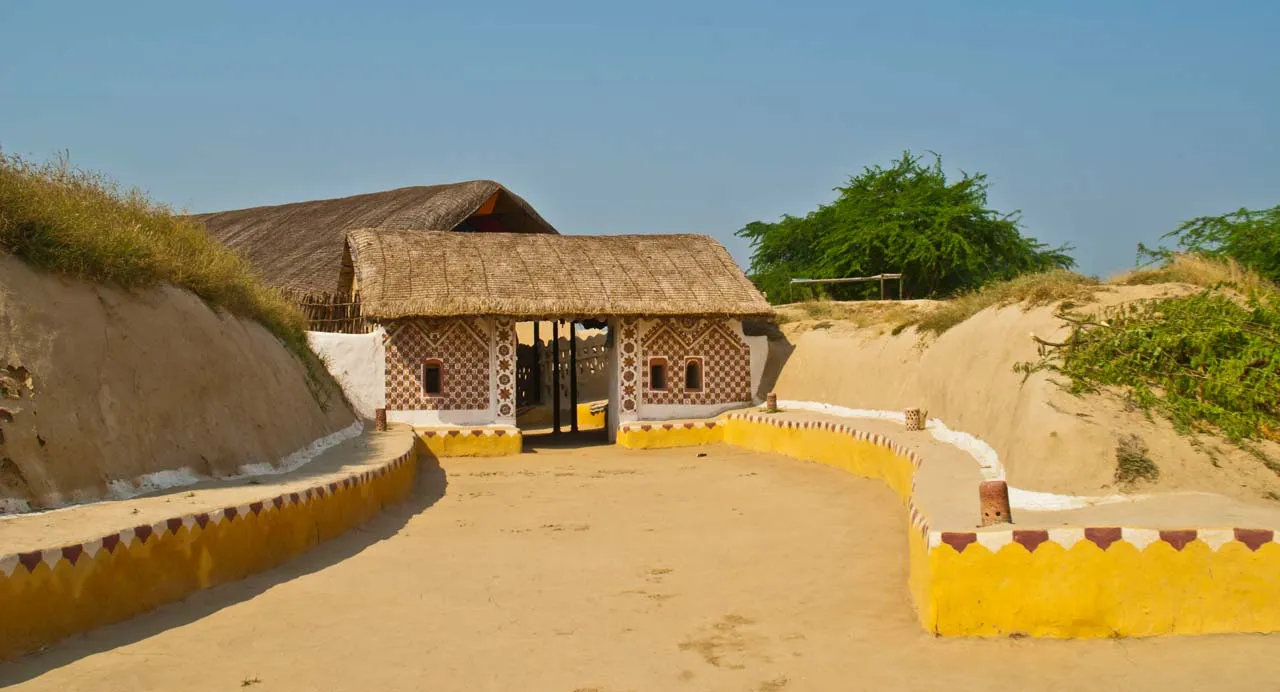

A kutcha house is a temporary or semi-permanent dwelling constructed using natural, locally available materials such as mud, clay, bamboo, straw, thatch, and wood. The term “kutcha” (also spelled “kuccha” or “kacha”) comes from the Hindi word meaning “raw” or “unripe,” signifying the impermanent nature of these structures.
Key Characteristics:
- 🏠 Built with organic, biodegradable materials
- 💰 Low construction cost
- 🌾 Common in rural and agricultural areas
- ⏰ Requires regular maintenance and repairs
- 🌡️ Naturally cool in hot weather
- 💧 Vulnerable to heavy rain and flooding
These houses have been the primary dwelling type in Indian villages for thousands of years, representing an architectural tradition that predates modern construction by millennia. Unlike their permanent counterparts, kutcha houses blend harmoniously with the natural environment and leave minimal ecological footprint.
Disclaimer: Information in this article is based on architectural research, government census data, and field studies. Kutcha house characteristics vary significantly by region, and specific details may differ from individual structures. Housing policies and schemes are subject to change.
Kutcha House Meaning in Hindi: Cultural Context
In Hindi, a kutcha house is called “कच्चा घर” (kacha ghar). The word breakdown reveals deeper meaning:
- कच्चा (Kacha): Raw, unripe, temporary, or unfinished
- घर (Ghar): House or home
The term reflects not just the physical structure but also represents a socioeconomic reality in India. Historically, kutcha houses have been associated with rural populations, agricultural communities, and economically disadvantaged sections of society. However, this perception is evolving as architects and environmental advocates recognize the sustainable and eco-friendly nature of traditional kutcha construction.
In census data and government housing schemes, the distinction between kutcha and pucca houses serves as an important indicator of living standards and development progress across different regions.
Kutcha House and Pucca House: Key Differences
Understanding kutcha houses requires comparing them with pucca houses, their permanent counterparts:
| Feature | Kutcha House | Pucca House |
|---|---|---|
| Materials | Mud, bamboo, straw, thatch | Brick, cement, concrete, steel |
| Durability | 5-10 years (with maintenance) | 50-100+ years |
| Cost | ₹50,000-₹2,00,000 | ₹5,00,000-₹50,00,000+ |
| Weather Resistance | Vulnerable to heavy rain | Resistant to all weather |
| Maintenance | High (annual repairs needed) | Low (minimal upkeep) |
| Temperature Control | Naturally cool | Requires fans/AC |
| Environmental Impact | Minimal (biodegradable) | High (carbon-intensive) |
| Resale Value | Very low | Appreciates over time |
Semi-Pucca Houses: A hybrid category exists where homes combine elements of both—for example, brick walls with a thatched roof, or a concrete foundation with mud walls.
Kutcha House Made Of: Construction Materials Explained
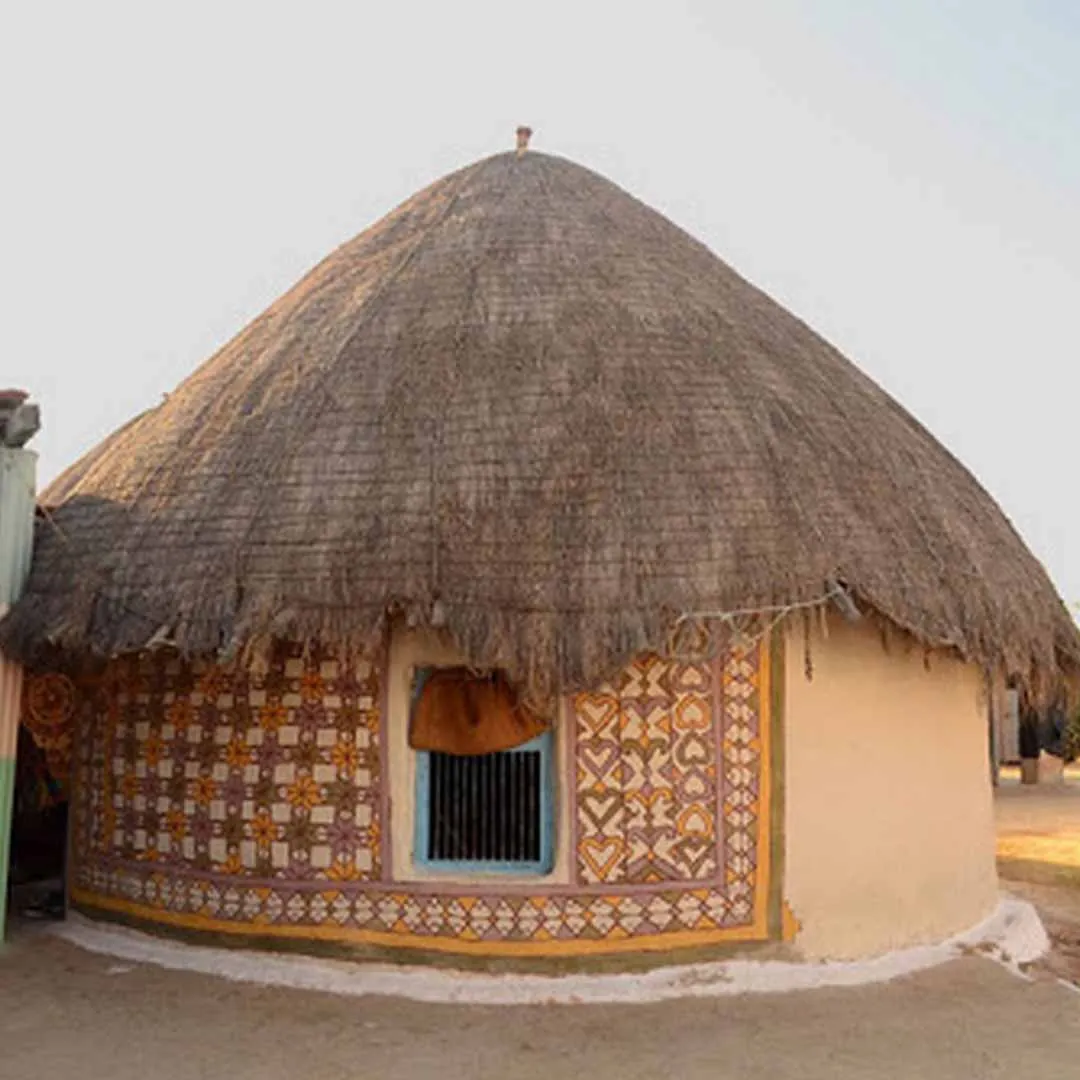

The beauty of kutcha houses lies in their use of 100% natural, locally sourced materials. Here’s what goes into building these traditional homes:
Primary Materials:
🟤 Mud and Clay The foundation of most kutcha houses, mud is mixed with water to create a paste that’s molded into walls. Clay provides binding properties and is often mixed with cow dung for added strength and insect resistance.
🎋 Bamboo Used extensively for structural support, bamboo poles form the skeleton of walls and roofs. In northeastern India and parts of Bihar, entire houses are constructed primarily with bamboo due to its abundance and flexibility.
🌾 Straw and Thatch Dried grass, wheat straw, coconut leaves, or palm fronds are woven together to create roofing. Thatch provides excellent insulation and is completely waterproof when properly laid in overlapping layers.
🪵 Wood and Timber Used for door frames, window frames, and roof supports. In hilly regions like Himachal Pradesh and Uttarakhand, wood plays a more prominent role in kutcha construction.
🪨 Stone In rocky terrain, flat stones are sometimes used for foundation or lower walls, though this pushes the structure toward semi-pucca classification.
Binding Agents:
- Cow dung: Mixed with mud for floors and walls; acts as a natural disinfectant
- Rice husk: Added to mud mixture for texture and strength
- Natural fibers: Jute or coir fibers reinforce mud walls
Types of Kutcha House: Regional Variations
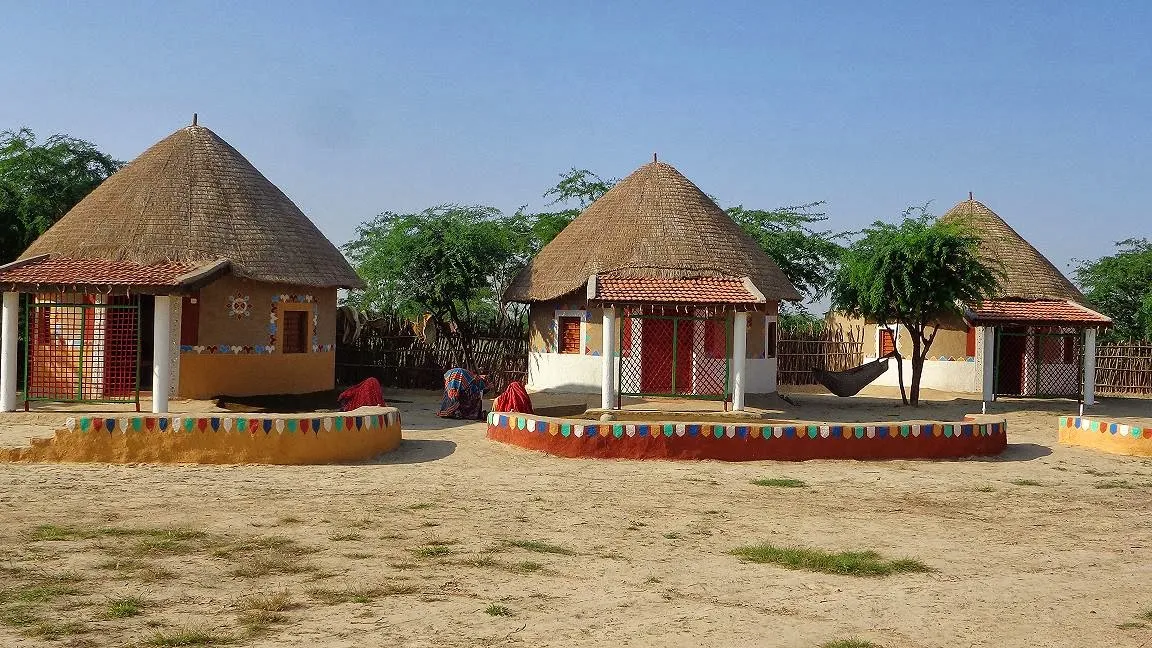

India’s diverse climate and geography have given rise to various kutcha house styles:
1. Mud Houses (Kachhi Jhopri)
The most common type found across central and northern India. Walls are made entirely of mud with thatched roofs. Found extensively in Uttar Pradesh, Bihar, Madhya Pradesh, and Rajasthan.
2. Bamboo Houses (Ikra Houses)
Prevalent in Assam, West Bengal, and northeastern states, these homes use bamboo for both walls and roofing. Walls are made by weaving bamboo strips into panels called “ikra.”
3. Thatched Huts (Ghumat)
Common in coastal regions like Goa, Karnataka, and Kerala, these circular or rectangular huts feature thick coconut palm or paddy straw roofing that extends almost to the ground.
4. Adobe Houses
Found in Rajasthan and Gujarat, these use sun-dried mud bricks rather than wet mud application. The bricks provide more structural stability in arid climates.
5. Wattle and Daub Houses
A technique where vertical wooden stakes are woven with horizontal branches (wattle), then plastered with mud (daub). Common in tribal areas of Madhya Pradesh, Chhattisgarh, and Jharkhand.
6. Stone and Mud Combination
In Himalayan regions, lower walls use stacked flat stones with mud mortar, topped with wooden frames and thatch roofing to withstand mountain weather.
Kutcha House Example: Real-World Case Studies
Let’s look at specific examples of kutcha houses across India:
Example 1: Traditional Mud House in Uttar Pradesh
- Location: Village near Varanasi
- Size: Approximately 400-600 sq. ft.
- Structure: Single-story with 2 rooms and a verandah
- Materials: Mud walls, bamboo support beams, rice straw thatch roof
- Features: Earthen floor finished with cow dung mixture, small ventilation openings, no windows
- Cost: ₹60,000-₹80,000
Example 2: Bamboo House in Assam
- Location: Rural Jorhat district
- Size: Raised platform house, 500 sq. ft.
- Structure: Built on stilts to prevent flooding
- Materials: Bamboo walls (ikra weave), bamboo pole framework, corrugated metal or thatch roof
- Features: Split bamboo flooring, elevated 3-4 feet above ground
- Cost: ₹1,00,000-₹1,50,000
Example 3: Circular Thatched Hut in Odisha
- Location: Tribal village in Koraput
- Size: 300 sq. ft. circular structure
- Structure: Conical thatched roof extending to 5 feet above ground
- Materials: Wooden poles, mud and cow dung plaster, grass thatch
- Features: Central cooking area, sleeping platforms along walls, single entrance
- Cost: ₹40,000-₹70,000
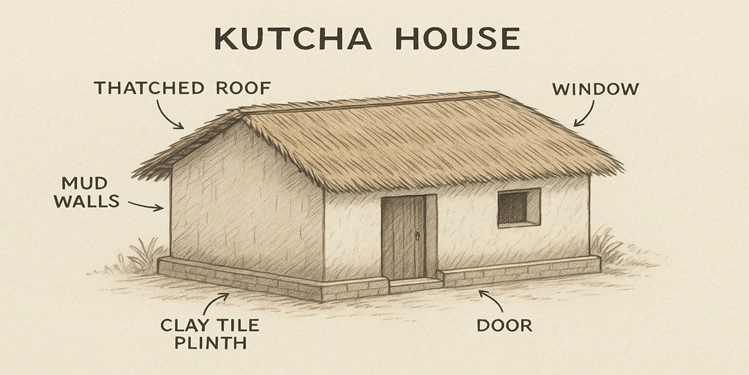
Kutcha House Drawing: Architectural Features
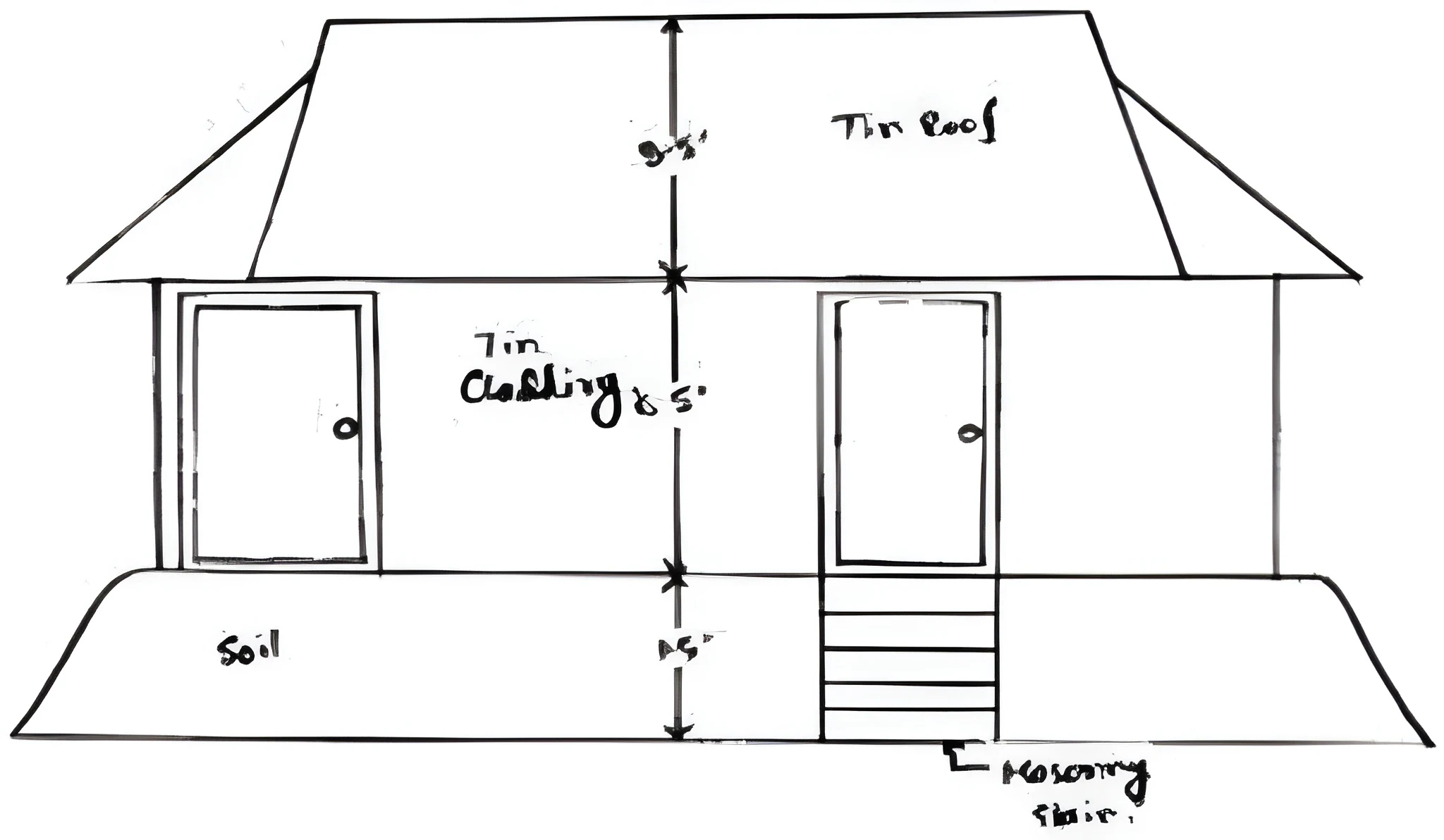

Visual understanding of kutcha houses reveals their ingenious design:
Typical Layout Components:
Exterior Features:
- Sloping thatched roof (30-45 degree angle for rain drainage)
- Mud or bamboo walls (18-24 inches thick for insulation)
- Small door opening (4-5 feet high to retain cool air)
- Minimal or no windows (to maintain temperature)
- Verandah or covered sitting area
- Surrounding courtyard for cooking and daily activities
Interior Layout:
- Single multipurpose room (200-400 sq. ft.)
- Separate cooking area (chulha – earthen stove)
- Storage space for grains in earthen pots or elevated platforms
- Sleeping area with charpoy (woven bed) or floor mats
- No separate bathroom (outdoor facilities common)
Structural Elements:
- Foundation: Shallow stone or compacted earth base
- Frame: Bamboo or wooden poles at corners and intervals
- Walls: 18-24 inch thick mud or woven bamboo
- Roof: Wooden beams supporting thatch layers
- Flooring: Compacted earth with cow dung coating
A typical kutcha house drawing shows a simple rectangular structure (15 ft × 20 ft average) with a steeply sloped roof extending beyond walls to protect from rain. The cross-section reveals the layered construction—mud walls, internal wooden supports, and thick thatch roofing.
Architecture and Design Philosophy
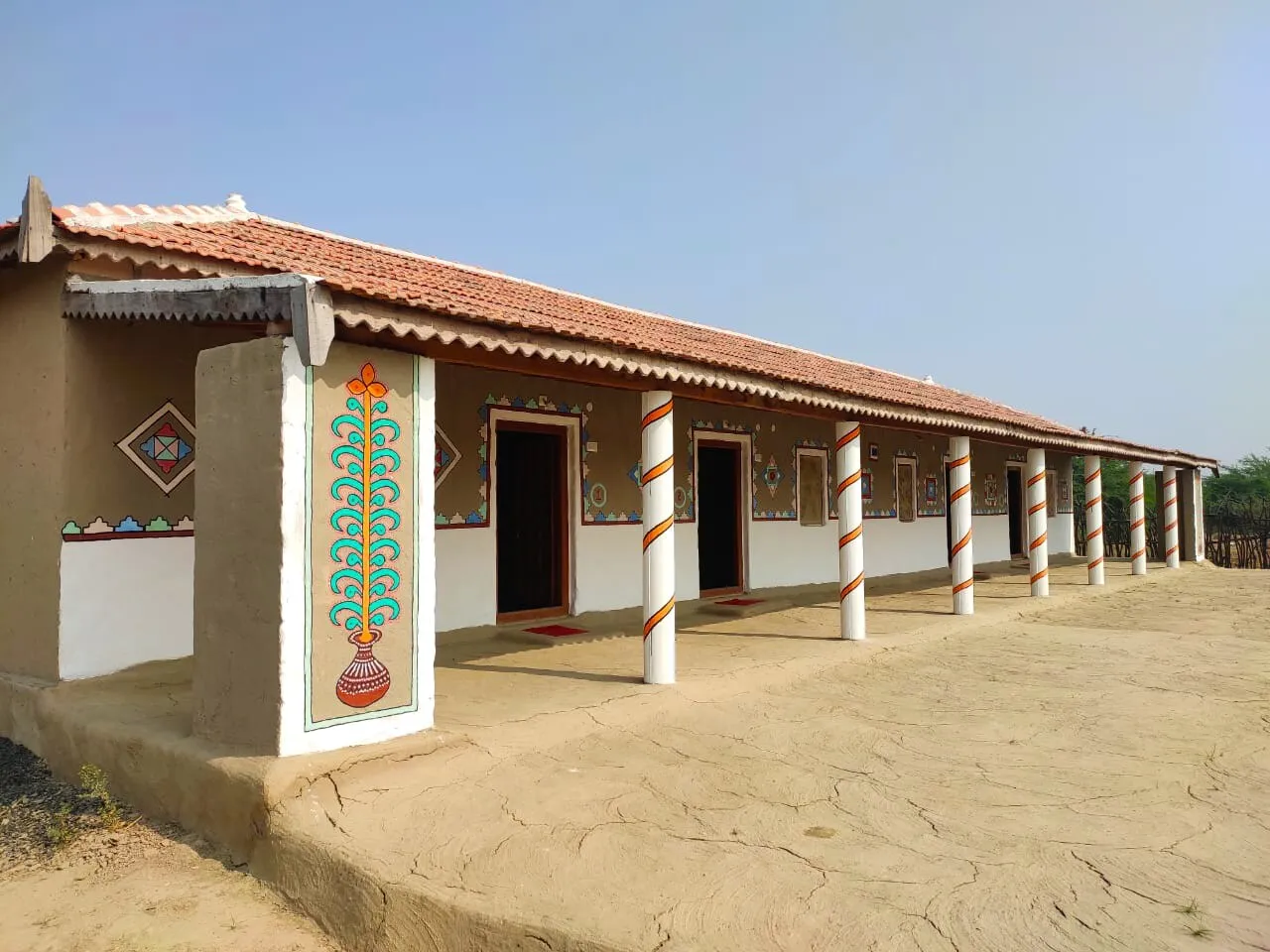

Kutcha houses embody principles of vernacular architecture—design that responds to local climate, materials, and cultural needs:
Climate Adaptation:
- Thick mud walls absorb heat during the day and release it at night, maintaining comfortable indoor temperatures
- Thatched roofs provide superior insulation compared to modern corrugated sheets
- Small openings minimize heat gain in summer and heat loss in winter
- Natural ventilation through roof gaps allows smoke from cooking fires to escape
Sustainable Design:
- Zero carbon footprint during construction
- Materials are locally sourced within 5-10 km radius
- Completely biodegradable—no demolition waste
- Annual repairs use the same natural materials
- Energy-efficient temperature control without electricity
Cultural Integration:
- Design reflects family structure and daily routines
- Courtyard serves as extended living space
- Storage solutions accommodate agricultural lifestyle
- Flexibility to expand by adding rooms as family grows
Living in a Kutcha House: Daily Realities
While kutcha houses offer sustainable benefits, residents face real challenges:
Advantages:
✅ Extremely affordable construction ✅ Cool interiors during hot summers ✅ Environmentally friendly ✅ Quick to build (2-4 weeks) ✅ Easy to repair with local materials ✅ Strong community building tradition
Challenges:
❌ Requires annual maintenance ❌ Vulnerable to monsoon damage ❌ Low durability (5-10 year lifespan) ❌ Poor sanitation facilities ❌ Attracts insects and rodents ❌ Limited protection from extreme weather ❌ No resale value or property appreciation ❌ Difficult to secure loans or insurance
Health and Safety Concerns: Kutcha houses face risks during natural disasters. Floods can erode mud walls within hours, cyclones can tear away thatched roofs, and earthquakes can collapse structures lacking proper foundations. The Government of India’s Pradhan Mantri Awas Yojana (PMAY) specifically targets families living in kutcha houses for upgrades to pucca construction.
Modern Perspectives: Revival of Kutcha Architecture
Interestingly, kutcha construction principles are experiencing a renaissance among architects and environmental advocates:
Contemporary Applications:
Eco-Resorts and Sustainable Tourism Luxury resorts in Rajasthan, Kerala, and Goa are building mud cottages and bamboo villas that command premium prices. These structures combine traditional kutcha techniques with modern amenities like attached bathrooms and electricity.
Earth Architecture Movement Architects like Laurie Baker pioneered “sustainable architecture” in India, incorporating mud, locally available stone, and traditional building techniques in contemporary homes. Organizations like Auroville Earth Institute teach earth architecture globally.
Cost-Effective Housing Solutions NGOs and architects are developing improved kutcha designs:
- Stabilized mud blocks (adding small amounts of cement)
- Bamboo-reinforced walls
- Raised platforms to prevent flooding
- Improved thatch treatment for longer roof life
Carbon-Neutral Construction As the construction industry contributes 40% of global carbon emissions, kutcha house principles offer valuable lessons for sustainable building practices.
Visit Also: Triggered Insaan House
Government Housing Schemes and Kutcha Houses
The Indian government tracks kutcha houses as an indicator of housing poverty:
Census Classification:
- Kutcha: Walls and roof both made of temporary material
- Semi-Pucca: Either walls or roof (not both) made of permanent material
- Pucca: Both walls and roof made of permanent material
Housing Schemes:
- Pradhan Mantri Awas Yojana (PMAY): Provides financial assistance (₹1.2-1.5 lakh) to families living in kutcha houses to build pucca homes
- Indira Awas Yojana: Previously targeted rural kutcha house residents
- State-specific schemes: Many states offer additional support for kutcha to pucca house conversion
According to Census 2011 data (latest comprehensive housing census), approximately 24% of rural households lived in kutcha houses, though this number has declined significantly with government intervention.
Conclusion: The Legacy and Future of Kutcha Houses
Kutcha houses represent a fascinating intersection of tradition, sustainability, and socioeconomic reality. While government programs work to eliminate kutcha housing as a marker of poverty, the architectural principles behind these structures offer valuable lessons for our climate-challenged future.
These humble dwellings, built by human hands using earth and plant materials, have sheltered countless generations across the Indian subcontinent. They embody sustainable living, minimal environmental impact, and ingenious climate adaptation—qualities that modern construction often lacks despite technological advances.
As India continues its development journey, the complete disappearance of kutcha houses seems inevitable. Yet their legacy persists in the growing eco-architecture movement, reminding us that the most advanced technology isn’t always the best solution for every context.
? FAQs About Kutcha Houses
Q1: What is a kutcha house?
A kutcha house is a temporary dwelling built with natural materials like mud, bamboo, straw, and thatch. Common in rural India, these houses are affordable and eco-friendly but require frequent maintenance and typically last 5-10 years.
Q2: What is the difference between kutcha and pucca houses?
Kutcha houses use temporary materials (mud, bamboo, thatch) and last 5-10 years, while pucca houses use permanent materials (brick, cement, concrete) and last 50+ years. Kutcha houses are cheaper but less durable and weather-resistant.
Q3: What materials are used to build a kutcha house?
Kutcha houses are made from locally available natural materials including mud or clay for walls, bamboo or wood for structural support, straw or thatch for roofing, and cow dung mixed with mud as a binding agent and floor finish.
Q4: How much does it cost to build a kutcha house?
A basic kutcha house costs between ₹40,000 to ₹2,00,000 depending on size, location, and materials used. This is significantly cheaper than pucca houses, making them affordable for low-income rural families, though they require ongoing maintenance expenses.
Q5: Are kutcha houses safe during monsoons and natural disasters?
Kutcha houses are vulnerable during heavy rains, floods, and cyclones. Mud walls can erode quickly, and thatched roofs may leak or blow away. They offer minimal protection during natural disasters, which is why government schemes encourage upgrading to pucca construction.