
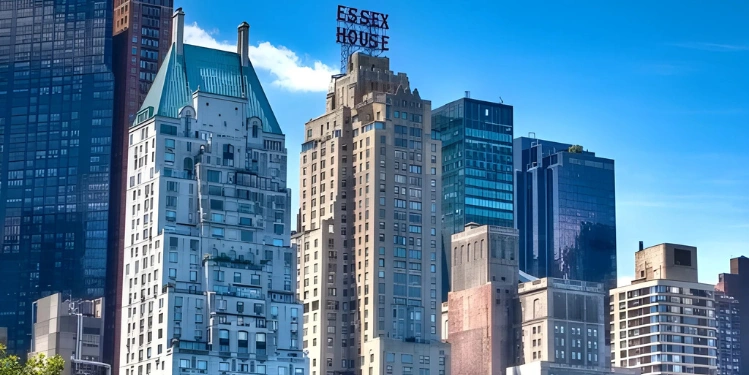
The JW Marriott Essex House is a 44-story Art Deco landmark at 160 Central Park South, New York City, built in 1931 and standing 463 feet tall. Designed by Frank Grad & Sons, it holds 426 rooms, 101 suites, and 147 residential condominiums. Today it is a member of Historic Hotels of America and one of the most sought-after wedding and luxury hotel destinations in Midtown Manhattan. A sweeping 2024 lobby and restaurant renovation by Stonehill Taylor and AvroKO has brought fresh energy to this century-old icon.
Quick Stats: JW Marriott Essex House at a Glance
| Property | JW Marriott Essex House New York |
| Address | 160 Central Park South, Midtown Manhattan, NY |
| Year Built | 1929–1931 |
| Architect | Frank Grad & Sons |
| Architectural Style | Art Deco |
| Height | 463 ft (141 m) |
| Floors | 44 Stories |
| Hotel Rooms | 426 Art Deco-style rooms + 101 suites |
| Residential Units | 147 condominium residences |
| Event Space | Over 11,000 sq ft |
| Historic Status | Historic Hotels of America (National Trust) |
| Signature Restaurant | Bourbon Steak New York by Michael Mina |
| Rooftop Sign | Iconic 6-story red neon sign (since 1932) |
| Current Brand | JW Marriott (since 2012) |
| Latest Renovation | 2024 Lobby & Restaurant (Stonehill Taylor / AvroKO) |
New York’s Most Storied Address

Ever wondered what it feels like to wake up directly across from Central Park, inside a building that has housed legends from David Bowie to Igor Stravinsky? That is precisely what the JW Marriott Essex House delivers every single day of the year.
Standing at 160 Central Park South since 1931, the Essex House New York is not just a hotel. It is a living piece of Manhattan history, draped in gold-leaf corridors, Art Deco geometry, and the kind of quiet grandeur that only comes from nearly a century of welcoming the world’s most discerning guests.
In 2024, the property made headlines again when design firm Stonehill Taylor completed a stunning lobby renovation and AvroKO reimagined Bourbon Steak by Michael Mina on the ground floor. Suddenly, Essex House NYC was back in the conversation not just as a landmark, but as a genuinely exciting destination for design lovers, couples planning weddings, and first-time visitors seeking the definitive New York experience.
This guide covers everything: the building’s turbulent history, its extraordinary architecture, the newly transformed interiors, the legendary wedding spaces, and the details most articles skip entirely.
A Hotel Born Against the Odds: The Essex House Story
Construction Begins One Day After the Wall Street Crash
The story of the JW Marriott Essex House begins with an almost cinematic twist. Ground broke on October 30, 1929 just one day after the Wall Street Crash that triggered the Great Depression. The project was originally meant to be called the Park Tower, then briefly renamed the Sevilla Tower, before finally opening on October 1, 1931 as the Essex House.
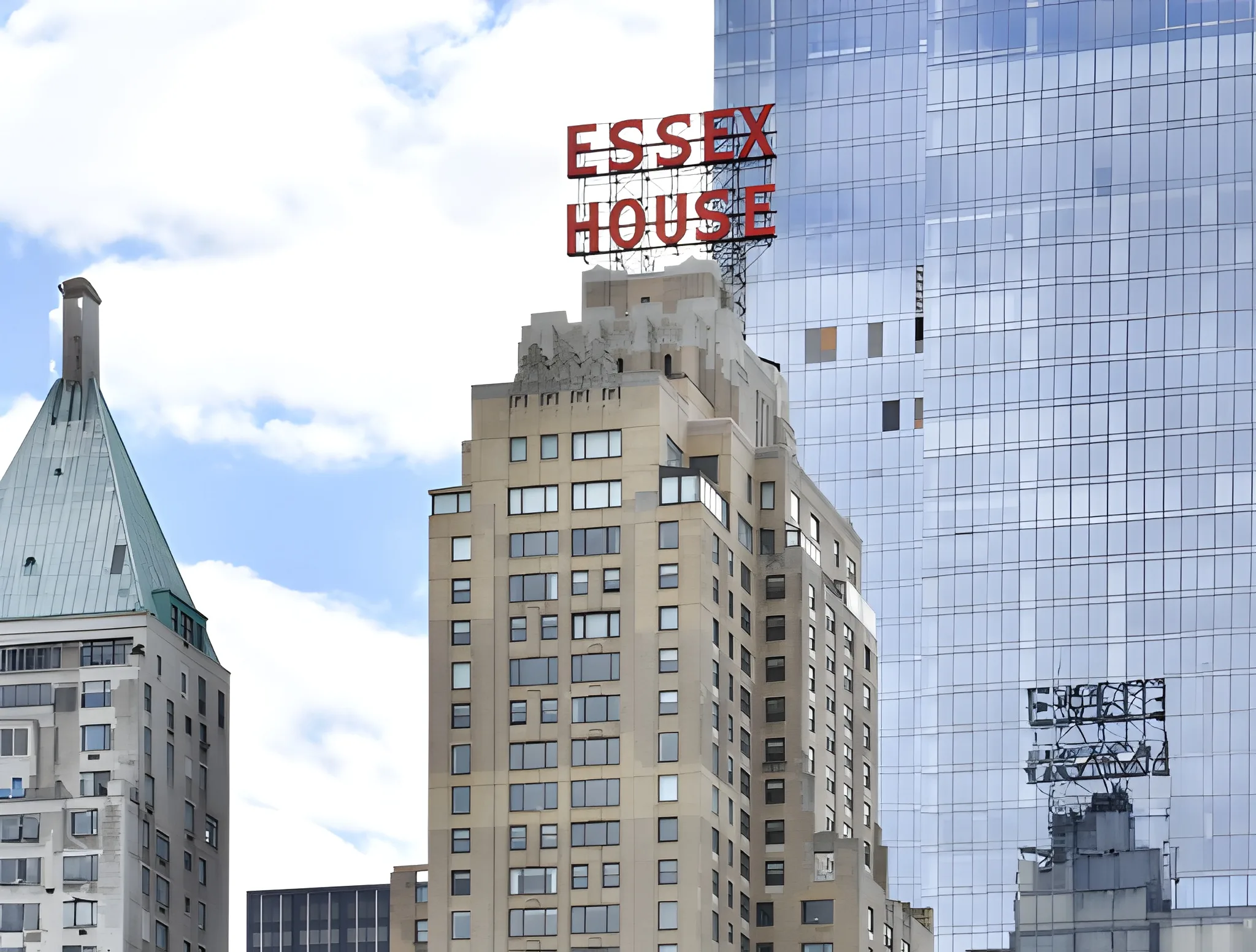
Its original developer, Abraham E. Lefcourt, went bankrupt before the hotel even opened. By 1932, the U.S. government’s Reconstruction Finance Corporation had taken ownership and that same year, workers erected the now-iconic six-story red neon rooftop sign, which has defined the Central Park South skyline ever since.
Ownership Changes That Read Like a History Textbook
Few buildings carry as many chapter titles. Here is the ownership lineage in brief:
- 1946: Sold to Sterling National Bank & Trust Co.
- 1969: Acquired by Marriott Hotels the first connection to today’s brand
- 1984: Sold to Japan Air Lines (JAL), operated under the Nikko Hotels division
- 1990–91: $75 million renovation by JAL, reducing rooms from 690 to 591
- 1999: Sold to Strategic Hotels & Resorts, rebranded under Westin Hotels
- 2006: Dubai Investment Group acquires it for $424 million; $90 million renovation follows under Jumeirah Hotels & Resorts
- 2012: Strategic Hotels re-acquires it for $325 million $50M less than Dubai paid and it officially becomes the JW Marriott Essex House New York
- 2016: Anbang Insurance Group (Beijing) purchases Strategic Hotels & Resorts portfolio for $5.5 billion
That $100 million swing between the 2006 and 2012 sale prices is a reminder that even iconic Manhattan real estate is not immune to market cycles. This is one of the financial trade-offs most glossy hotel features never mention.
Location: Where Central Park Meets Manhattan Luxury
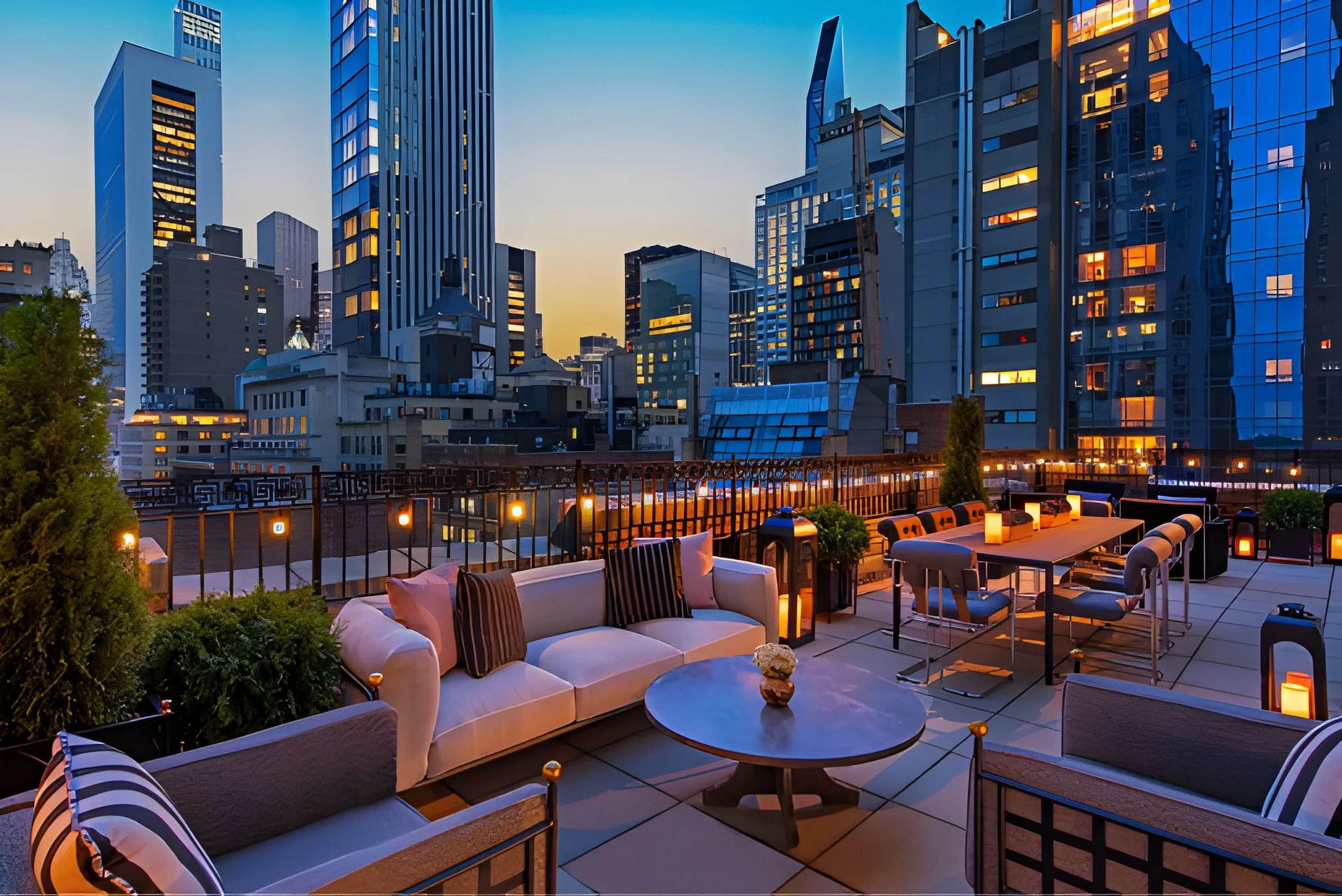

The JW Marriott Essex House New York location is, simply put, irreplaceable. The hotel sits at 160 Central Park South in Midtown Manhattan, positioned directly at the southern border of Central Park. This places guests within a two-minute walk of the park gates and within easy reach of Carnegie Hall, Fifth Avenue luxury retail, and Columbus Circle.
The address puts the hotel in one of the most photographed stretches of New York City. Rooms and suites on the park-facing side offer what can only be described as a living postcard particularly on winter mornings when the tree canopy is bare and the skyline stretches unobstructed across the horizon.
Nearby landmarks include The Plaza Hotel (one block east), Time Warner Center (two blocks west), and a dozen world-class dining institutions within walking distance. For visitors, this is as central as Midtown Manhattan gets and for couples booking JW Marriott Essex House New York weddings, the park backdrop is a genuine competitive advantage no other Manhattan ballroom can replicate.
Architecture & Exterior: Art Deco Done Right
The Frank Grad & Sons Blueprint
The JW Marriott Essex House New York exterior was designed by the firm Frank Grad & Sons and completed in 1931 right at the crest of the Art Deco movement’s influence in American architecture. The building rises 463 feet (141 meters) over 44 stories, supported by a steel column and concrete slab frame structure.
Art Deco’s fingerprints are unmistakable here. The facade features the movement’s signature language: clean geometric setbacks, symmetrical massing, bold vertical lines that draw the eye upward, and ornamentation that references ancient cultures and industrial imagery rather than the natural motifs of earlier movements. Where Beaux-Arts buildings like the Plaza leaned into baroque flourish, the Essex House facade speaks in confident, linear strokes.
The Rooftop Sign: Six Stories of Neon History
Perhaps no single architectural element defines the Essex House NYC skyline presence more than its rooftop neon sign. Erected in 1932 just one year after opening the six-story red neon “Essex House” lettering has glowed over Central Park South for over 90 years. It is one of the last surviving large-scale vintage neon hotel signs in Manhattan, and a genuine piece of the city’s visual identity.
This is not a decorative flourish added for Instagram. It was a marketing decision made during the Great Depression, when the building needed every possible way to announce itself to a skeptical market. The sign survived every ownership change, every renovation, and every push toward modernization. That staying power says something.
Essex House Inside: Interiors Built to Impress
The 2024 Lobby Renovation by Stonehill Taylor
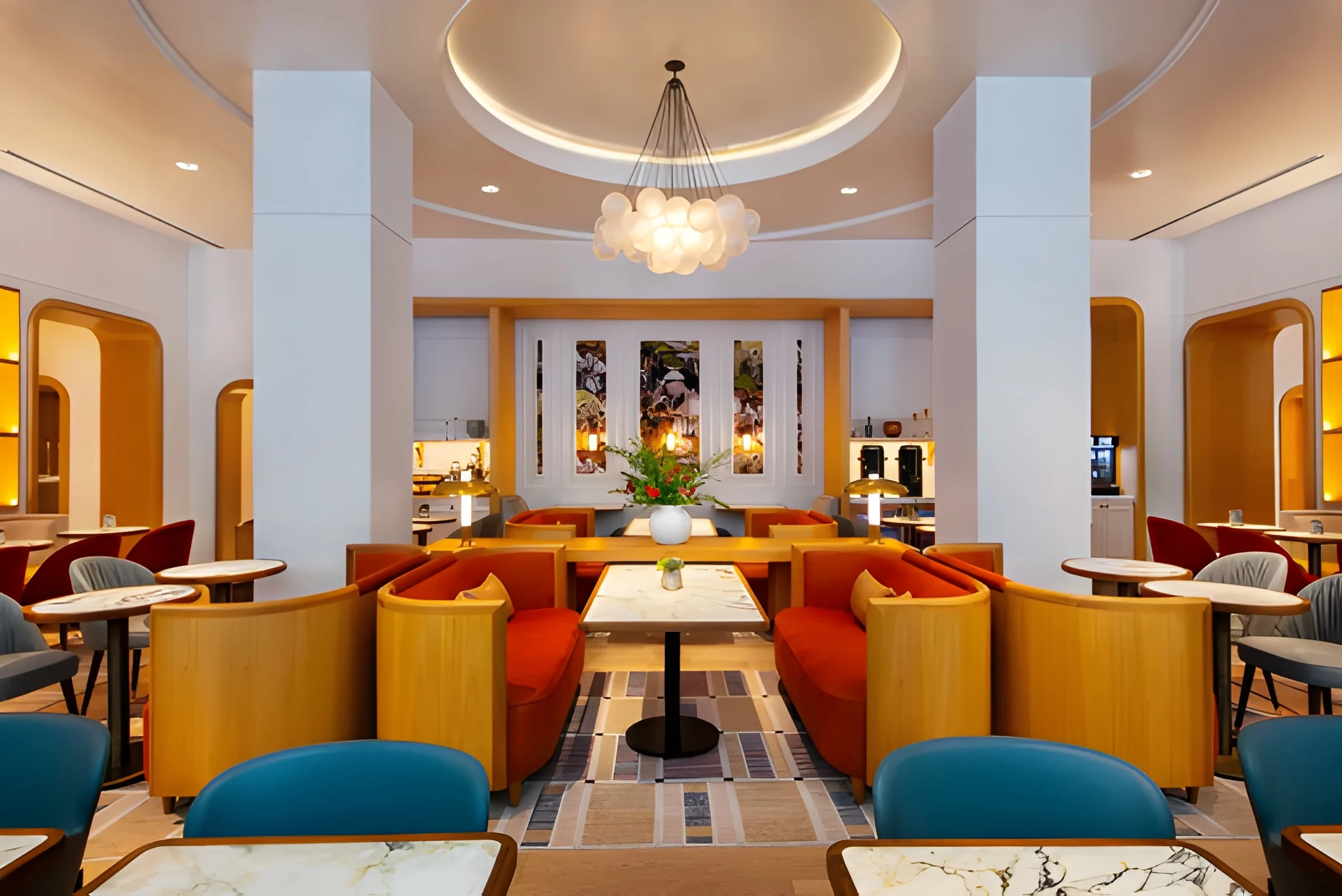
The most significant recent transformation of the Essex House interior was completed in 2024, when New York-based design firm Stonehill Taylor finished a complete lobby overhaul. The brief was clear: honor the building’s Art Deco heritage while introducing a vocabulary that feels genuinely contemporary.
Stonehill Taylor’s solution was architecturally precise and visually restrained. Large arched portals now greet guests at the entrance, serving both as aesthetic anchors and circulation guides directing foot traffic naturally toward the reception zone. The corridor connecting the 58th Street entrance to the main lobby was reimagined with intricate detailing and layered patterns.
The palette draws from the Central Park landscape itself: natural hues, wood paneling, and inviting shades of blue. A custom watercolour floral carpet anchors the reception area, and a JW Garden living wall lush with greens and blooms brings Marriott’s signature biophilic design feature into this historic context. Art pieces throughout the lobby draw directly from architectural elements found within Central Park.
Bourbon Steak New York by Michael Mina
Simultaneously with the lobby work, AvroKO in collaboration with Stonehill Taylor as architect of record executed a complete gut renovation of Bourbon Steak New York by Michael Mina. The 300-seat restaurant now features new operable windows creating an indoor/outdoor seating concept, two archways framing the dining areas, and a bar that combines modern design with a traditional Art Deco tribute.
The material palette includes mixed metals, fire-kiln ceramic tiles, rich rust hues, and patinated metals all chosen to evoke fire’s role in the kitchen while remaining visually connected to the building’s 1930s roots. Construction was handled by Shawmut Design and Construction, who also renovated the hotel’s lobby, concierge, and executive lounges.
Guestrooms and Suites
The JW Marriott Essex House holds 426 Art Deco-style rooms and 101 suites, along with 147 private residential condominiums. Rooms are divided into categories ranging from interior views to the coveted Park View suites which directly face Central Park South. All rooms feature flat-screen televisions with smart streaming capabilities including Netflix, YouTube, and Pandora.
The most recent guestroom renovation handled by HR Construction Group covered room finishes, wall coverings, plumbing fixtures, flooring, and corridor upgrades throughout the residential floors. The intervention was careful not to erase the period character of the building’s bones.
Key Features & Amenities
| Feature | Detail | Status |
| Wedding Capacity | Up to 950 guests (combined spaces) | ✅ Grand Salon, Petit Salon, Park View Salon |
| Dining | Bourbon Steak by Michael Mina | ✅ Breakfast through late-night |
| Fitness | 24-Hour Fitness Center | ✅ Open year-round |
| Spa | On-site spa & beauty treatments | ✅ Full menu of services |
| Concierge Services | Limousine, airport transfers, tours | ✅ Full concierge desk |
| Technology | Internet TV, Netflix, YouTube, Pandora | ✅ In every guestroom |
| Park Views | Central Park South-facing rooms & suites | ✅ Landmark & Park View categories |
| Rooftop Signage | Six-story red neon ‘Essex House’ sign | ✅ Iconic NYC skyline marker |
JW Marriott Essex House New York Weddings: A Venue Above the Rest
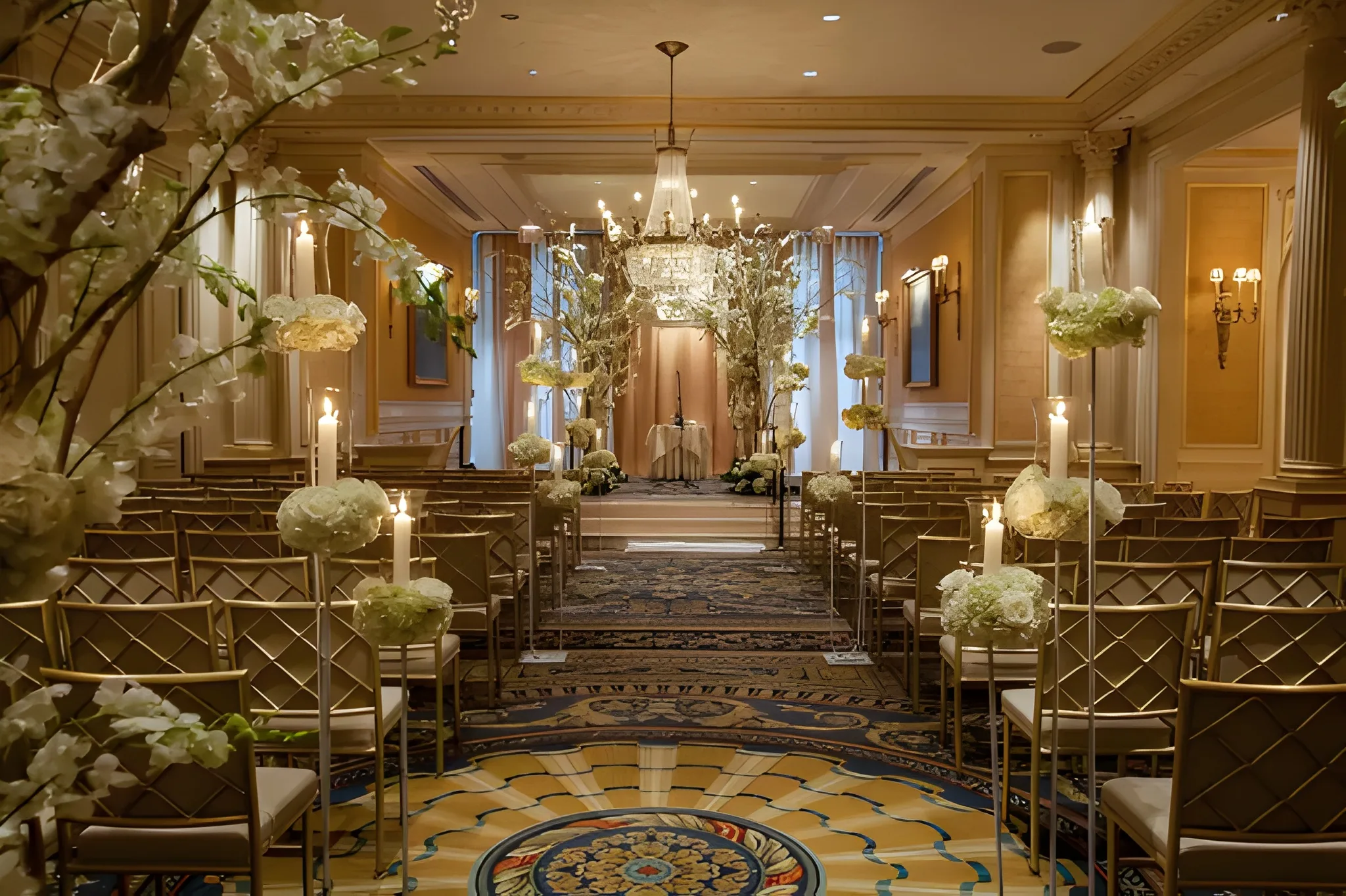

For couples searching for a Manhattan wedding venue that combines genuine historic gravitas with operational excellence, JW Marriott Essex House New York weddings have become a benchmark experience. The hotel hosts events across multiple distinct spaces, each carrying its own character.
The Grand Salon
The centerpiece of the hotel’s event offering is the Grand Salon a Beaux Arts-style ballroom featuring hand-painted murals, crystal chandeliers, and gold-detailed walls that have drawn comparisons to the Palace of Versailles. The space accommodates up to 350 guests in banquet setup or up to 550 for a standing reception.
The Petit Salon and Park View Salon
Connecting directly to the Grand Salon, the Petit Salon functions as a cocktail hour space and pre-ceremony gathering room. Alongside it sits the Park View Salon a newer private reception room with floor-to-ceiling windows offering direct views of Central Park South. When all three spaces combine, they can accommodate up to 950 guests.
The Art Deco Salon and Central Park Room
For smaller affairs, the Art Deco Salon seats 80 or hosts 125 for a cocktail reception, while the Central Park Room located on the second floor with park-facing windows divides into Central Park East and West for groups of 50 to 90 guests. Total event space across the property exceeds 11,000 square feet.
Couples consistently note the hotel’s operational detail in reviews. One bride described the team arranging slippers the moment her heels became uncomfortable the kind of unprompted gesture that separates genuinely service-oriented venues from those that simply look good in photographs.
Celebrity Residents and Cultural Footprint
The Essex House New York carries a cultural weight that few hotels anywhere can match. The building has been one of the final living addresses for David Bowie and Russian-born composer Igor Stravinsky. It is also known as the location where musician Donny Hathaway died in 1979.
Baseball legend Casey Stengel was a regular during his managing tenure with the Yankees and the Mets, and numerous visiting Major League Baseball teams have stayed at the Essex House when playing in New York. The hotel’s position on Central Park South equidistant from both Yankee Stadium (by subway) and the cultural venues of the Upper West Side made it a natural base for athletes and entertainers alike.
The hotel also once hosted the three Michelin-starred restaurant Alain Ducasse at Essex House, which operated until January 2007. For a period in the early 2000s, it was one of the few hotel restaurants in New York to hold that rating a credential that placed the address at the very top of the city’s dining conversation.
What Most Don’t Tell You: The Essex House Trade-Offs
This is where honest coverage matters. The JW Marriott Essex House is genuinely extraordinary but it comes with context worth understanding:
- The current 426 rooms and 101 suites exist because residential condominium owners occupy parts of the building permanently. This mix creates a hotel whose floor count does not translate directly into guest room availability something to factor into peak-season booking strategy.Room count complexity:
- Membership in Historic Hotels of America means design choices are made under preservation review. This is largely a strength but it means future renovations cannot simply ‘modernize’ the property at will.Historic preservation constraints:
- As a JW Marriott (Marriott International’s luxury tier, one below Ritz-Carlton), room rates at the Essex House reflect both the brand tier and the irreplaceable Central Park South address. Budget flexibility matters here more than at comparable-tier properties in less central locations.Price positioning:
- Despite decades of ownership changes, no operator has ever removed or significantly altered the rooftop sign. This is not accidental it is a condition of the property’s historic identity, and it appears to be permanent.
Read Also: John Caudwell House
Conclusion
Across the many luxury hotel profiles we cover in this space, it is rare to encounter a building that genuinely earns the word iconic. The JW Marriott Essex House is one of a handful that does.
It is not simply the Art Deco architecture, the Central Park views, or the celebrity history that sets it apart. It is the accumulation: 94 years of survival through the Great Depression, multiple ownership changes, $90 million and $75 million renovations, a 2024 design overhaul, and a rooftop neon sign that has outlasted every trend the Manhattan skyline has thrown at it.
For design lovers, the Essex House interior is a masterclass in adaptive preservation how a building stays alive across a century without becoming a museum. For couples considering JW Marriott Essex House New York weddings, it represents the rare venue where the setting itself does half the storytelling. And for anyone simply looking to stay in New York, waking up to Central Park from a building that has housed Bowie, Stravinsky, and a Michelin three-star kitchen is the kind of experience that justifies the splurge.
FAQs About JW Marriott Essex House
Where is the JW Marriott Essex House located?
At 160 Central Park South, Midtown Manhattan directly on the southern edge of Central Park, steps from Fifth Avenue, Carnegie Hall, and Columbus Circle.
How much is the JW Marriott Essex House worth?
The last verified sale was $325 million in 2012. Its current value isn’t publicly listed, but its Central Park location, 44 stories, and historic status make it one of the most valuable hotel assets in the U.S.
Can visitors tour the JW Marriott Essex House?
There’s no formal architectural tour, but the hotel is open to the public for dining at Bourbon Steak by Michael Mina. The lobby is accessible and worth a visit following its 2024 renovation.
Who designed the Essex House interiors?
The 2024 lobby renovation was by Stonehill Taylor. Bourbon Steak was designed by AvroKO. The original 1931 building was designed by Frank Grad & Sons.
Is the Essex House pet-friendly?
Yes guests have confirmed the hotel accepts pets. It’s always best to verify the current policy directly with the hotel when booking.