
While website builders and templates serve a purpose for standard informational sites, true digital innovation requires a custom approach. Custom Website Development is not just about putting a business online; it is about building a proprietary software asset that handles complex functionality, scales with your user base, and integrates seamlessly with your operations.
When off-the-shelf solutions hit their limit, custom engineering takes over. Here is how the ecosystem of Tech Stacks, Specialized Applications, and Security comes together to build robust digital platforms.
1. The Foundation: Tech Stack Development
The “Tech Stack” is the engine under the hood. Unlike a standard CMS where you are stuck with what they give you, custom development allows you to choose the perfect tools for the job.
● Front-End Excellence: This is what the user sees and touches. Using modern frameworks like React, Vue, or Angular, developers create reactive, app-like interfaces that load instantly and update without refreshing the page.
● Back-End Logic: This is the brain of the operation. Whether using Node.js for real-time applications, Python for data-heavy processing, or PHP for widespread compatibility, the back-end handles the database interactions and business logic.
● Full-Stack Synergy: Full-stack development unifies these two worlds, ensuring that the data flowing from the server matches the experience displayed on the screen perfectly.
2. Solving Unique Problems: Specialized Development
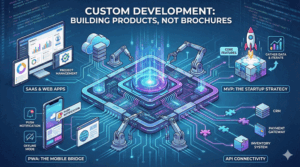

Custom development is essential when you are building a product, not just a brochure.
● SaaS & Web Apps: If you are building the next project management tool or customer portal, you need Custom Web Application Development. This transforms a website into a Software-as-a-Service (SaaS) product.
● The Mobile Bridge (PWAs): Progressive Web Apps are a game-changer. They run in a browser but behave like native mobile apps—offering offline capabilities and push notifications without the friction of an App Store download.
● The Startup Strategy (MVP): For innovators, MVP Development (Minimum Viable Product) is the strategy of building the core features first. It allows you to launch quickly, gather user data, and iterate without wasting budget on unnecessary features.
● Connectivity (APIs): No system exists in a vacuum. API Integration allows your custom site to “talk” to third-party CRMs, payment gateways, and inventory systems, automating your entire workflow.
3. Protecting the Asset: Maintenance & Security

● Speed & Vitals: Google’s Core Web Vitals are now a ranking factor. Continuous Speed Optimization ensures code remains lean and databases remain indexed for sub-second load times.
● Security Posture: The web is a hostile environment. Regular Security Audits and Malware Removal protocols protect your user data from breaches.
● Infrastructure: reliable Web Hosting & Domain Management ensures high availability, so your application is online 24/7/365.
Conclusion
Custom Website Development is the difference between renting an apartment and building a house. It gives you ownership, flexibility, and the ability to expand. Whether through a robust React front-end or a scalable Node.js back-end, custom code is the investment that prepares your business for the future.