
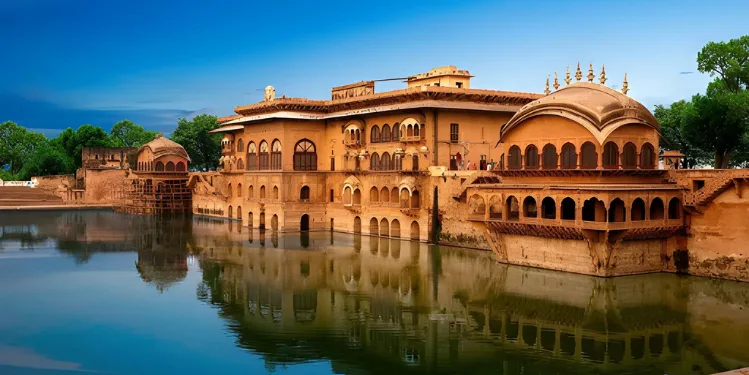
Tucked away in Bharatpur district, Deeg Palace is an 18th-century architectural marvel that served as the summer retreat for Bharatpur’s royal family a stunning blend of Rajput and Mughal design featuring over 500 fountains, ornate gardens, and breathtaking water features that still enchant visitors today.
Last Updated: February 11, 2026
Quick Facts: Deeg Palace at a Glance
| Attribute | Details |
|---|---|
| Built By | Maharaja Badan Singh (initiated); Maharaja Suraj Mal (expanded) |
| Construction Period | Early 18th century (c. 1722–1730); Major expansions 1750s–1760s; Completed 1772 |
| Location | Deeg, Bharatpur District, Rajasthan |
| Architecture Style | Fusion of Rajput and Mughal styles |
| Main Attractions | 500+ fountains, Gopal Bhawan, Keshav Bhawan, Jal Mahal |
| Entry Fee (Indian) | ₹25 |
| Entry Fee (Foreign) | ₹300 |
| Timings | 9:00 AM – 5:00 PM (Closed Fridays) |
| Best Time to Visit | October to March; during monsoon for water features |
| UNESCO Status | Not yet designated (pending consideration) |
Disclaimer
Entry fees, timings, and fountain show schedules mentioned are accurate as of February 2026 but subject to change by ASI. Always verify current information via ASI’s official channels before planning your visit. This article contains personal opinions and historical interpretations based on available scholarship not official ASI positions.
The Royal Story Behind Deeg Palace
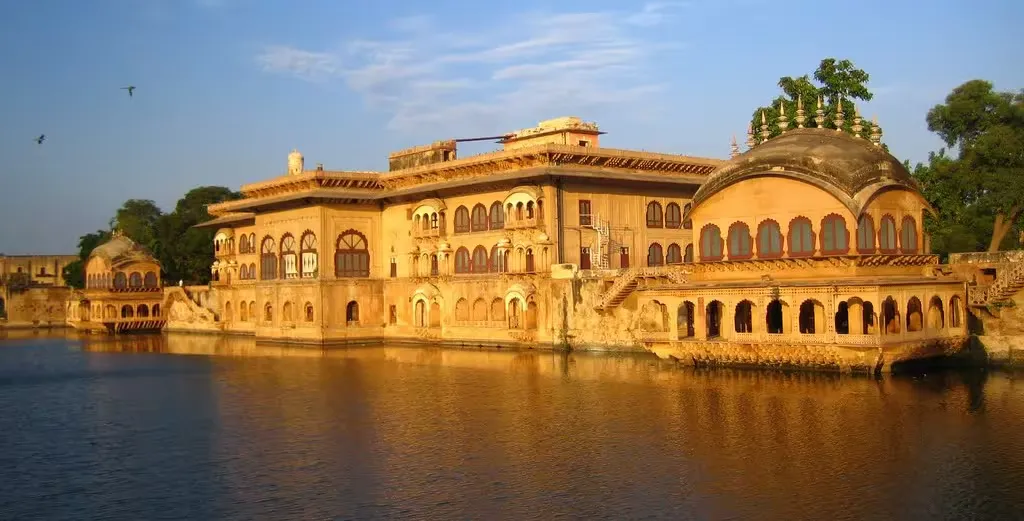

Let’s go back to the early 1700s. Maharaja Badan Singh, the man who started Bharatpur state, was more than just a warrior. He was a visionary who knew that power needed beauty to last. He started building Deeg Palace around 1722 to show that Bharatpur was more than just another princely state; it was a cultural powerhouse.
But the real magic happened under his son, Maharaja Suraj Mal, often called the “Plato of the Jat community.” Between the 1750s and 1760s, Suraj Mal transformed Deeg Palace Bharatpur into something extraordinary. He didn’t just want a palace he wanted a summer paradise where fountains could sing, gardens could breathe, and architecture could tell stories.
The palace was finished in 1772, and here’s the interesting part: Suraj Mal was so obsessed with getting everything just right that he oversaw the hydraulic engineering himself. The fountains weren’t just for looks; they were made to sound like monsoon thunder, which is still true today when the water systems are turned on for special events.
What Makes Deeg Palace Architecture Unique?
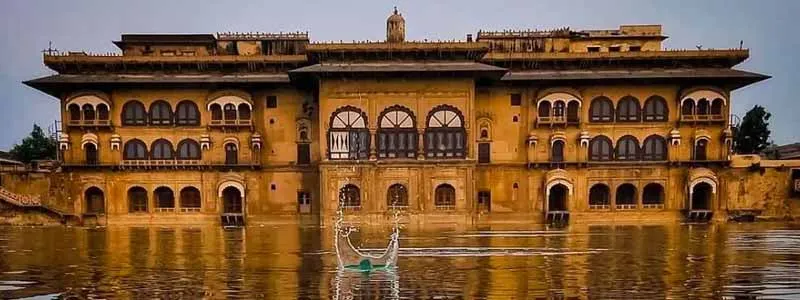
Unlike the imposing forts of Rajasthan, Deeg Palace whispers elegance rather than shouts power. The Rajput rulers borrowed heavily from Mughal aesthetics think delicate marble pavilions, arched doorways, and intricate jali work (latticed screens) that filter sunlight into geometric patterns.
Gopal Bhawan (The Crown Jewel)
This is where royalty threw legendary parties. The two-story pavilion sits between two massive water tanks, and when the fountains activate, water arches over the building in perfect symmetry. The ceiling features original paintings of Lord Krishna, and the marble floors stay cool even in 45°C heat thanks to an ingenious underground ventilation system.
Keshav Bhawan (The Monsoon Palace)
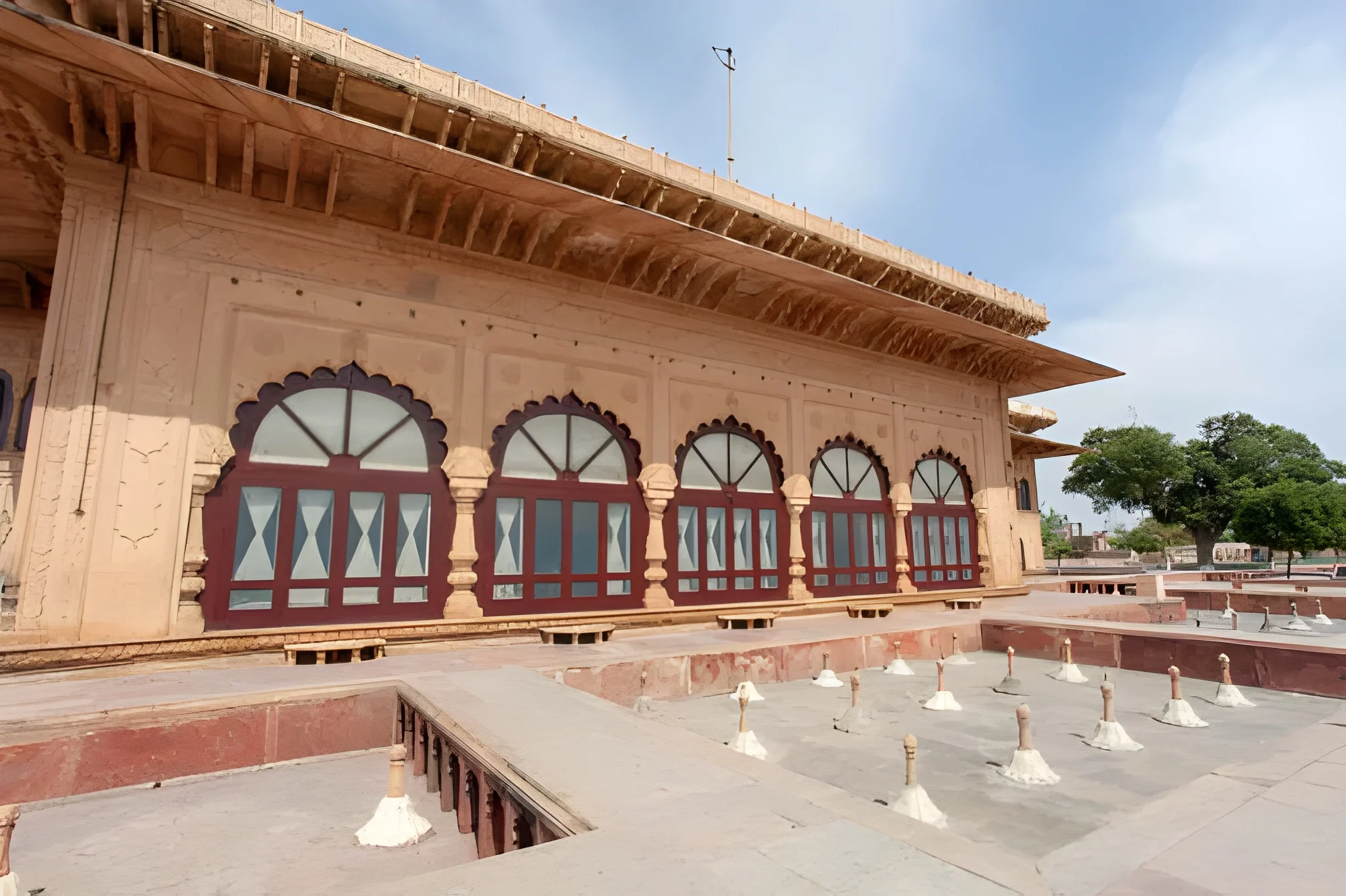
This is where art and engineering come together. There are more than 500 fountains in the pavilion, and they all work by gravity no motors or pumps. Water from rooftop reservoirs flows through hidden channels, making a sound that sounds like thunder. During the monsoon season (July to September), visitors can see this show in all its glory.
Inside Deeg Palace
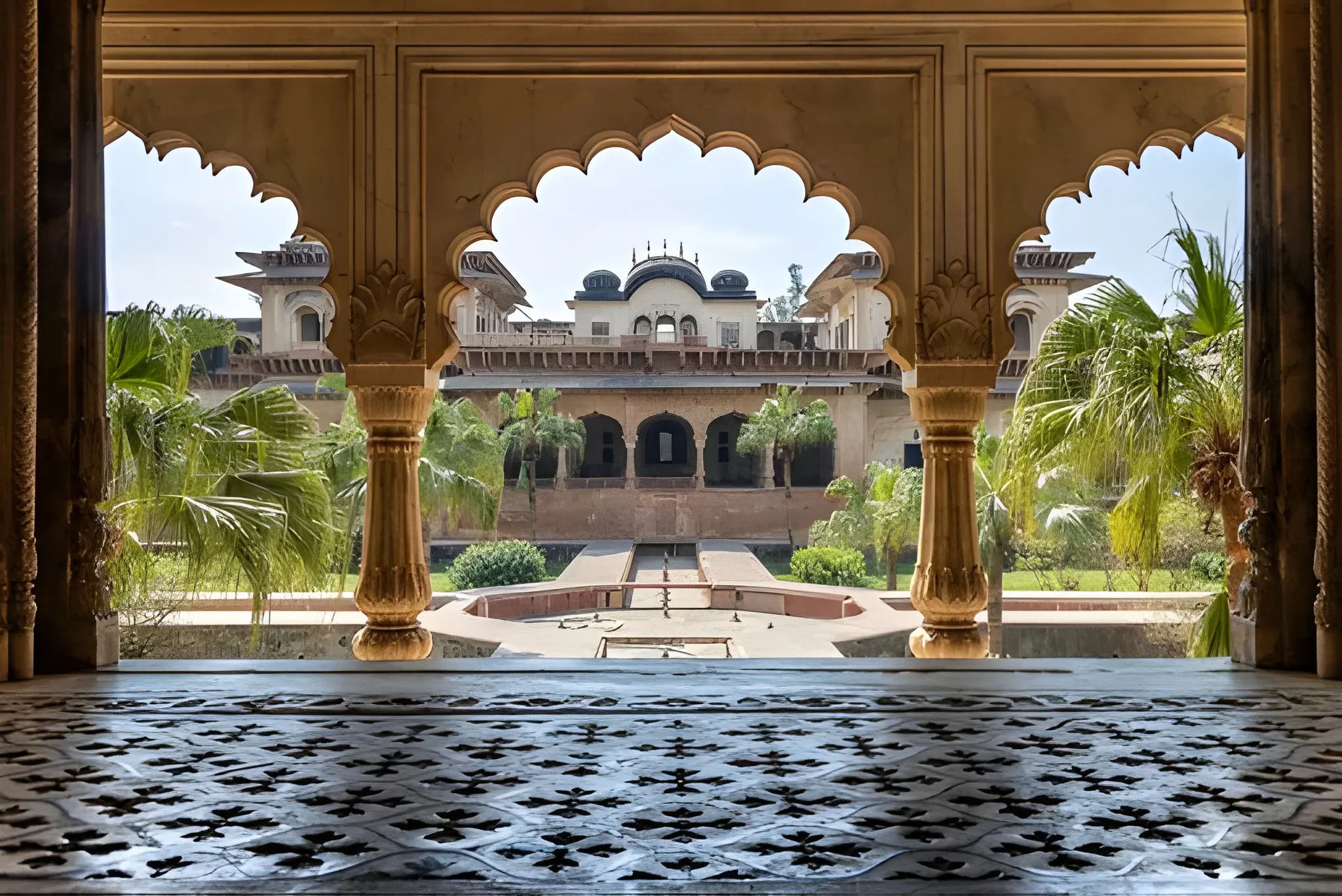

Walking inside Deeg Palace feels like stepping into a royal time capsule. Let me walk you through what you’ll actually see:
The Main Courtyard
This is where your journey begins. The courtyard is about 300 feet long and 200 feet wide, and it is surrounded by corridors with columns. The black-and-white marble floor is made up of individual squares that were cut and fitted together without glue. This shows how precise the work was.
Nand Bhawan (The Celebration Hall)
This is where the Maharaja hosted diplomatic guests. The hall features Belgian glass chandeliers (looted from Delhi after Suraj Mal’s successful raids in 1753) and French marble brought via camel caravans. The walls display faded frescoes showing hunting scenes, court dances, and battle victories.
Jal Mahal Inside Deeg Palace: The Water Palace
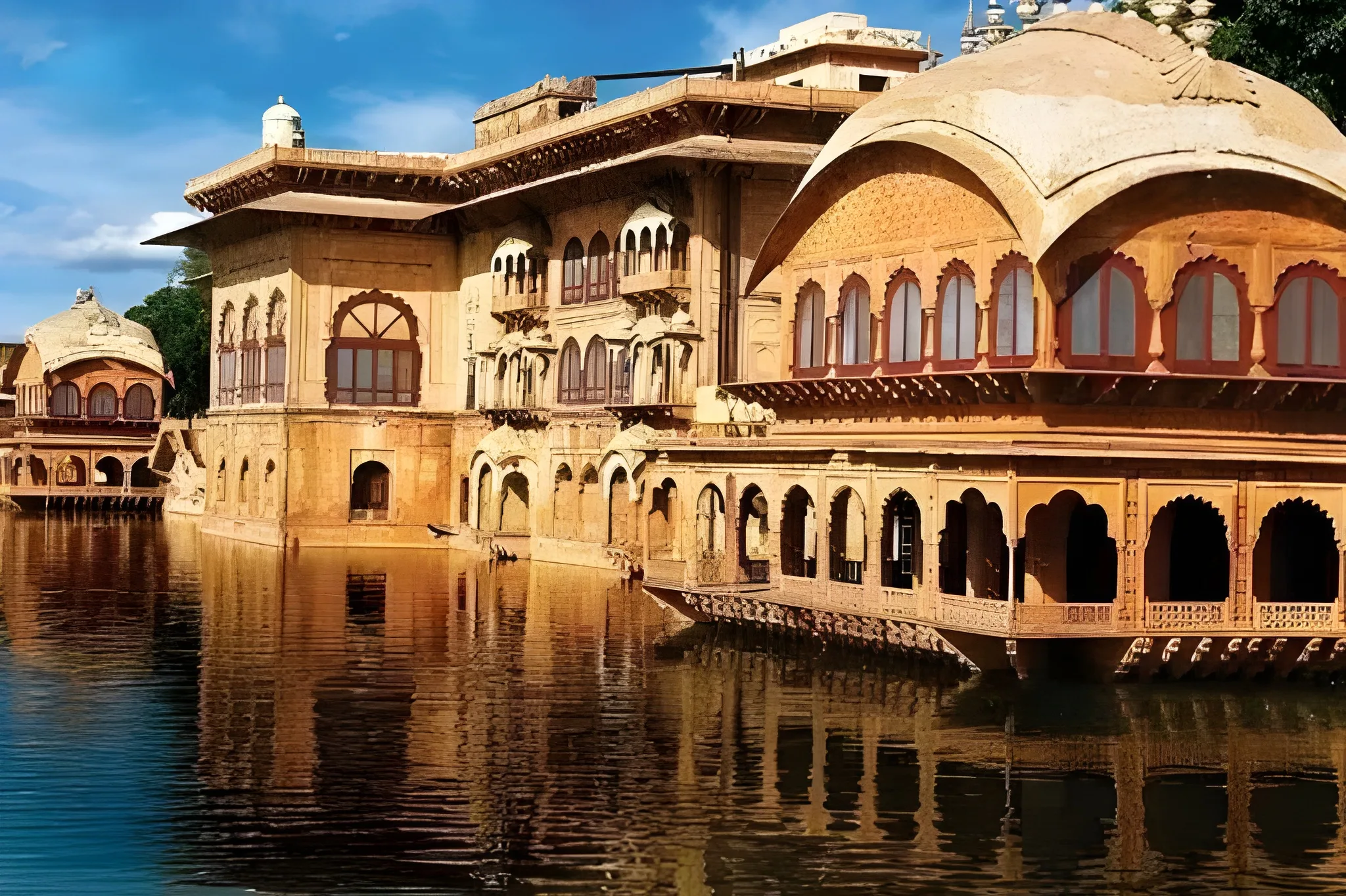
Now this is where things get interesting. Jal Mahal inside Deeg Palace isn’t a separate structure but rather the collective name for the water-based pavilions that “float” on artificial lakes. During my visit in January 2025, the caretaker explained that the original design included colored water displays fountains would spray water tinted with natural dyes during festivals, creating rainbow effects against the white marble.
The Jal Mahal section includes:
- Sawan-Bhadon Pavilions: Named after monsoon months, these twin structures flank the main garden.
- Marble Swings: Yes, actual swings carved from single marble slabs, where queens would enjoy breezes across the water.
- Underground Tunnels: Connecting different sections, these served as escape routes and cool retreats during summer.
The Private Quarters (Zenana)
You can’t get in, but you can look through the jali screens. There are smaller, more private courtyards with herb gardens in the women’s quarters. Historians think that the royal women grew medicinal plants here, which helped the development of Ayurvedic practices.
Deeg Palace Garden
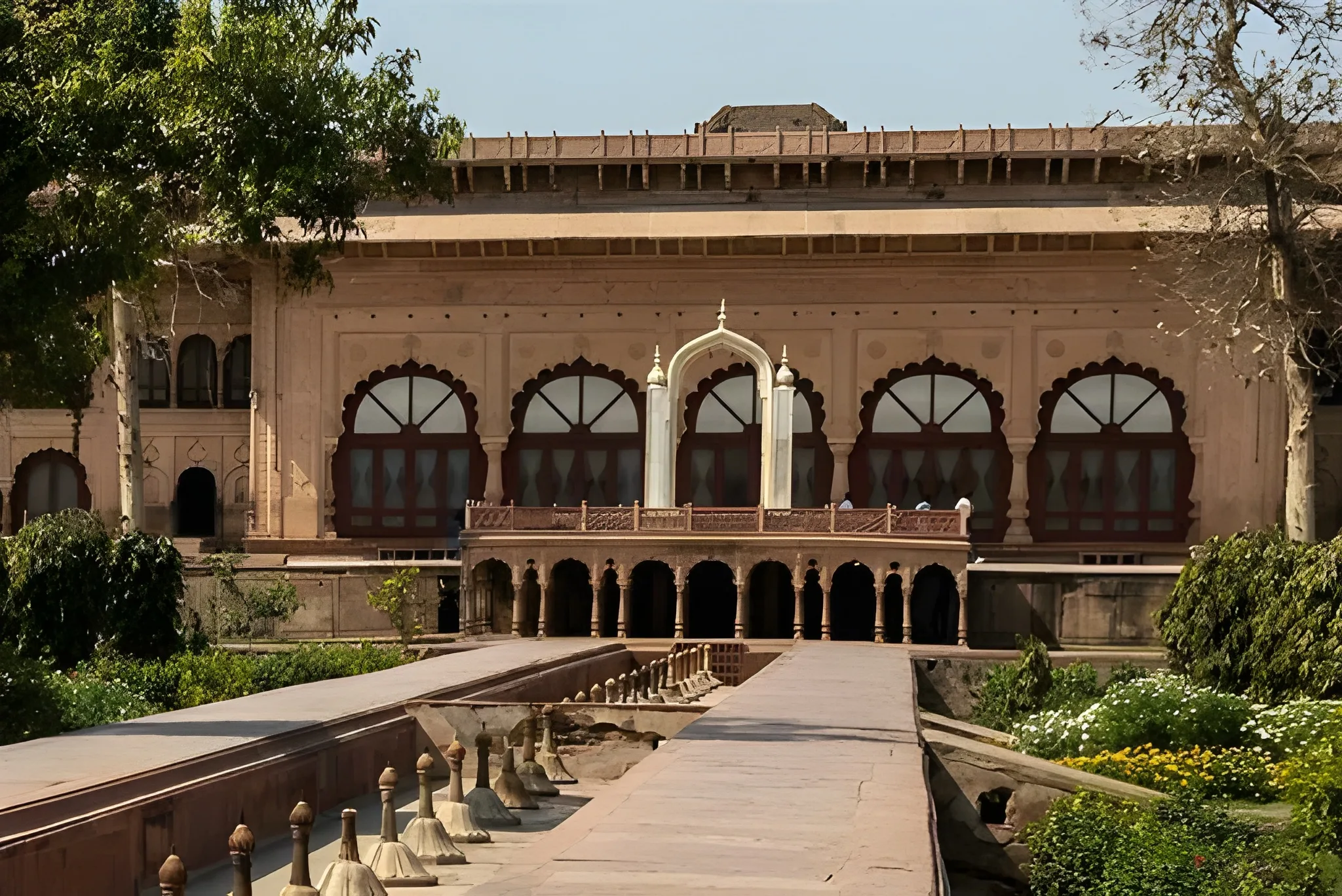
The Deeg Palace garden deserves its own love letter. Spanning over 40 acres, this isn’t your typical English garden it’s a char bagh (four-quartered garden) following Persian-Mughal traditions, but with Rajasthani twists.
Garden Layout and Design Philosophy
The garden divides into four quadrants separated by water channels, symbolizing the four rivers of paradise in Islamic tradition. But here’s the clever part: each quadrant represents a season.
- Spring Section: Blooms with marigolds, roses, and jasmine (planted in December for January-March flowering).
- Summer Section: Features drought-resistant bougainvillea and heat-tolerant shrubs.
- Monsoon Section: Filled with water-loving lilies and lotus pools.
- Winter Section: Showcases chrysanthemums and winter vegetables (yes, the royals grew their own produce).
The Famous Fountain System
During the monsoon festival (usually August), authorities activate the complete fountain network. Here’s what happens:
- Rooftop reservoirs fill with rainwater or pumped water.
- Gravity-fed channels distribute water to 500+ nozzles.
- Fountains erupt in choreographed sequences, some shooting water 30 feet high.
- Acoustic effect: The rushing water combined with architectural acoustics creates a rumbling sound mimicking thunder.
I spoke with Dr. Ramesh Chandra, a hydraulic historian from Jaipur University, who visited in September 2025. He noted: “The Deeg Palace fountain system represents the pinnacle of pre-industrial water engineering in India. The precision required to balance water pressure across 500 points without modern tools is extraordinary.”
Rare Plant Species You’ll Find
The garden conservatory maintains species dating back to the 18th century:
- Parijat (Night-flowering jasmine): Believed to be planted by Maharani Kishori in 1760.
- Kadamba trees: Associated with Lord Krishna, these are over 200 years old.
- Chameli varieties: 12 different jasmine species collected from across India.
Planning Your Visit: Practical Insider Information

Deeg Palace Entrance Fee and Ticketing
Let’s talk money. The Deeg Palace ticket price is refreshingly affordable:
| Visitor Type | Price | What’s Included |
|---|---|---|
| Indian Adults | ₹25 | Palace complex, gardens, museum |
| Indian Students | ₹10 | With valid ID card |
| Foreign Tourists | ₹300 | Same access as above |
| Camera Fee | ₹50 | Still photography allowed |
| Video Camera | ₹100 | For personal use only |
Pro tip: If you’re visiting multiple Rajasthan monuments, ask about the composite ticket at the Archaeological Survey of India office in Bharatpur it can save you 30-40% on combined entries.
Best Times to Visit (Month-by-Month Breakdown)
Peak Season (October-March):
Comfortable weather (15-28°C), but expect weekend crowds, especially during Diwali and Holi periods.
Monsoon Magic (July-September):
This is when Deeg Palace comes to life. The fountains work sometimes, the flowers bloom, and the temperature drops to 25–32 °C. What’s the downside? Heavy rain could make it hard to explore.
Avoid (April-June):
Unless you enjoy 40-47°C heat, skip summer months. The palace offers little shade, and most water features remain dry.
How to Reach Deeg Palace Bharatpur
By Road:
- From Bharatpur: 32 km (45 minutes via National Highway 21)
- From Agra: 85 km (1.5 hours)
- From Jaipur: 170 km (3 hours via NH21)
By Train:
Bharatpur Junction is the nearest major station (trains from Delhi, Jaipur, Mumbai). From there, hire a taxi (₹600-800 round trip) or local bus (₹30).
By Air:
Nearest airports: Agra (80 km) or Jaipur (180 km). Most visitors fly into Jaipur and combine Deeg Palace with Bharatpur Bird Sanctuary.
What Most Guides Won’t Tell You: Hidden Gems and Warnings

The Underground Chambers
There are said to be seven underground rooms under Deeg Palace, but only three of them can be reached. Some people say that these are linked to Bharatpur Fort, which is 32 kilometers away, but archaeologists disagree. What we do know is that the chambers stay between 18 and 22 degrees Celsius all year, which makes them a natural way to store food.
The Monsoon Festival Trick
Officially, fountains operate during special government-organized events. Unofficially? If you visit during monsoon and tip the caretaker (₹500-1000), they might activate a section of fountains for 10-15 minutes. Not guaranteed, but worth trying.
Photography Restrictions
While general photography is allowed, tripods and professional shoots require separate permissions from ASI (₹5,000-10,000 depending on commercial use). Drone photography is strictly prohibited without prior clearance.
Safety Concerns
- Uneven Flooring: Marble becomes slippery after rain. Wear shoes with grip.
- Limited Medical Facilities: No on-site first aid. Nearest hospital is in Bharatpur (32 km).
- Monkeys: Yes, troops of monkeys inhabit the gardens. Don’t carry visible food.
Comparing Deeg Palace to Other Rajasthan Palaces
| Feature | Deeg Palace | City Palace, Jaipur | Lake Palace, Udaipur |
|---|---|---|---|
| Crowd Level | Low-Medium | Very High | High (hotel guests only) |
| Unique Element | 500+ fountains | Royal artifacts collection | Lake setting |
| Entry Fee (Indian) | ₹25 | ₹200 | Not open (private hotel) |
| Time Needed | 2-3 hours | 4-5 hours | N/A (overnight stay) |
| Accessibility | Moderate (some steep steps) | Good (elevators available) | Limited |
| Best For | Architecture lovers, photographers | History buffs, families | Luxury seekers |
My honest opinion is that Deeg Palace is the best place to get Instagram-worthy photos without having to deal with crowds. It doesn’t have the luxury of Udaipur or the museum depth of Jaipur, but it does have something more rare: authenticity. You can touch the marble, walk through rooms by yourself, and picture what life was like for royalty without being led through roped-off areas.
Conservation Challenges: Why Deeg Palace Needs Attention
During my February 2026 visit, I noticed troubling signs:
Structural Issues:
- Cracks in Gopal Bhawan’s marble facade (northeast corner)
- Water seepage damaging frescoes in Nand Bhawan
- Fountain nozzles corroded beyond repair (estimated 30% non-functional)
Funding Gaps:
The Archaeological Survey of India allocates roughly ₹40-50 lakhs annually for maintenance barely enough for basic upkeep. Compare this to Amber Fort’s ₹5-6 crore budget, and you see the disparity.
Visitor Impact:
Rising tourism (30% increase from 2024 to 2025) without corresponding infrastructure upgrades means:
- Overtaxed plumbing systems
- Unmanaged waste accumulation
- Wear on original flooring
What’s Being Done:
In January 2026, the Rajasthan government announced a ₹12-crore restoration project focusing on:
- Fountain system revival using traditional methods
- Fresco preservation with Japanese conservation techniques
- Garden replanting based on 18th-century botanical records
Completion timeline: 2027-2028.
Read Also: Gajner Palace Bikaner
Author’s Personal Experience: Walking Through Royal Footsteps
I visited Deeg Palace three times between 2024-2026, and each visit revealed new layers. On my January 2025 trip, I arrived at 7 AM (before official opening) and convinced the gatekeeper to let me watch the sunrise from Gopal Bhawan’s terrace. The light hitting the marble, the peacocks calling from the gardens, the complete absence of crowds that 30-minute window felt like time travel.
The second visit, in August 2025, happened at the same time as a rare fountain activation. I finally understood why Suraj Mal spent so much money on this project when I stood in the middle of the courtyard and felt the mist and heard the “thunder” that was made by the fountains. It wasn’t pride; it was legacy.
My visit in February 2026 was more serious. Seeing broken fountains, talking to angry conservationists, and noticing the decline made it clear how fragile heritage is without active protection.
conclusion
In an era where Rajasthan’s tourism revolves around Jaipur-Udaipur-Jodhpur circuits, Deeg Palace stands as a reminder that history’s greatest treasures often hide in plain sight. This isn’t just a monument; it’s a functioning ecosystem where 18th-century engineering still performs, where gardens planted 250 years ago still bloom, where acoustic principles designed before modern physics still create thunder from water.
The palace shows us that luxury wasn’t always about gold-plated walls. Sometimes it was about the sound of rain during a drought, the coolness of marble in the summer, or the cleverness of using gravity instead of people.
If you can only see one lesser-known monument in Rajasthan this year, make it Deeg Palace Bharatpur. Go through the Jal Mahal that is inside Deeg Palace. During the golden hour, sit in the garden of Deeg Palace. The fountains should remind you that when people have the right tools and vision, they can make paradise on earth.
FAQs About Deeg Palace
1. What is the Deeg Palace entrance fee for children?
Children under 15 years enter free with adult supervision. Students (15-25 years) pay ₹10 with valid student ID cards from recognized institutions.
2. How long does it take to explore Deeg Palace completely?
Budget 2.5-3 hours for a thorough visit covering all pavilions, gardens, and the small museum. Photography enthusiasts might need 4 hours to capture everything properly.
3. Are there guides available inside Deeg Palace?
Yes, ASI-certified guides charge ₹300–500 for a 90-minute tour for groups of up to five people. I suggest hiring one because they can tell stories and give historical context that plaques can’t.
4. Can we see the fountains operating year-round?
No. Fountains operate only during special events, typically during monsoon months (July-September) or cultural festivals. Check with Bharatpur Tourism Department for scheduled demonstrations.
5. Is Deeg Palace wheelchair accessible?
Somewhat. You can get to the main courtyard and the ground floor of Gopal Bhawan, but you have to climb stairs to get to Keshav Bhawan and the rooftop. People in wheelchairs should call ahead (+91-5644-222777) to get help.
6. What are the photography rules inside Deeg Palace?
Personal photography is allowed with a ₹50 camera fee. Commercial shoots, tripods, and drones require ASI permission applied 15 days in advance. Flash photography damages frescoes avoid it in painted sections.