
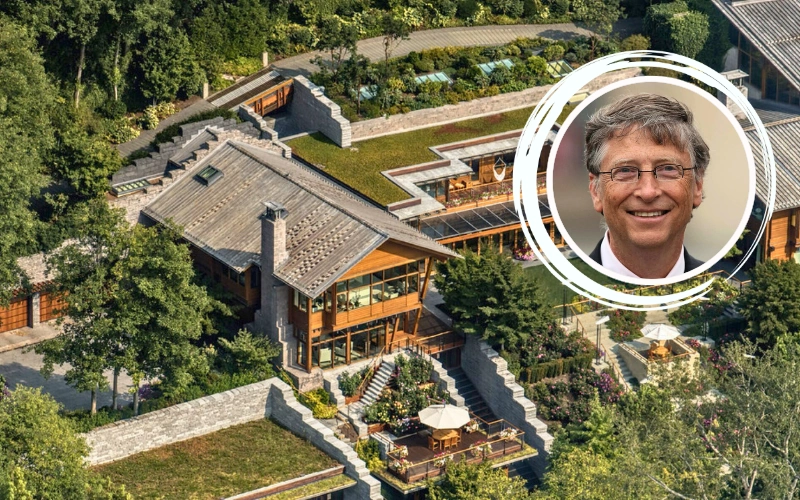
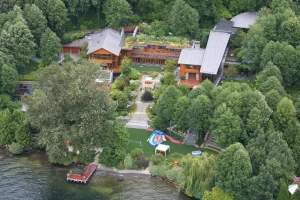
Imagine stepping into a home where every room adjusts to your comfort with a tap, where music follows you seamlessly, and where even the walls display art that changes on a whim. This isn’t a sci-fi movie—it’s the reality of Bill Gates house, a technological masterpiece that redefines luxury living. Known as Xanadu 2.0, this 66,000-square-foot mansion in Medina, Washington, is more than just a residence; it’s a symbol of innovation, sustainability, and extravagance. Nestled on the shores of Lake Washington, Bill Gates house showcases how one of the world’s most influential philanthropists blends cutting-edge technology with eco-conscious design to create a home unlike any other.
In this article, we’ll take you through the jaw-dropping features of Bill Gates house, from its futuristic automation systems to its eco-friendly architecture. We’ll also highlight why this mansion, built over seven years at a cost of $63 million, stands as a testament to Gates’ vision for a smarter, greener future. Our main point is clear: Bill Gates house is not just a home but a groundbreaking fusion of technology, luxury, and sustainability that sets a new standard for modern living.
| Feature | Details |
|---|---|
| Property Name | Xanadu 2.0 |
| Owner | Bill Gates |
| Location | Medina, Washington, USA |
| Year Construction Began | 1988 |
| Year Completed | 1995 |
| Estimated Construction Cost | $63 million |
| Current Estimated Value | $130 million – $178 million (varies) |
| Annual Property Taxes | Approx. $1 million |
| Total Area | 66,000 square feet |
| Bedrooms | 7 |
| Bathrooms | 24 |
| Kitchens | 6 |
| Reception Hall Capacity | Up to 200 guests |
| Library Size | 2,100 sq ft |
| Private Theater | 20 seats |
| Garage Capacity | Up to 23 vehicles |
| Swimming Pool | 60 ft long; indoor-outdoor; underwater music |
| Gym | 2,500 sq ft; includes a trampoline room |
| Other Features | Private tunnel, rotating artwork displays, automated climate/music settings, Codex Leicester book worth $30.8M |
The Making of Xanadu 2.0: A Seven-Year Journey

A Vision Turned Reality
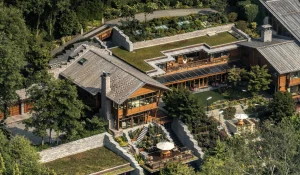
In 1988, Bill Gates purchased a plot of land in Medina, Washington, for $2 million, a modest investment for what would become one of the most expensive homes in the world. The construction of Bill Gates house, dubbed Xanadu 2.0 after the fictional estate in Citizen Kane, took seven years and $63 million to complete. By 2009, its assessed value soared to $147.5 million, with annual property taxes exceeding $1 million. Designed by Bohlin Cywinski Jackson and Cutler-Anderson Architects, the mansion blends Pacific Lodge-style architecture with futuristic technology, creating a home that’s as innovative as Gates’ Microsoft empire.
The project wasn’t just about luxury—it was a testing ground for smart home technology. Over 300 workers, including 100 electricians, worked tirelessly to bring Gates’ vision to life. The result? A 66,000-square-foot estate that’s as much a tech lab as it is a home, with every detail meticulously planned to enhance comfort and efficiency.
Pacific Lodge Style: Beauty Meets Sustainability
Bill Gates house is an “earth-sheltered” structure, meaning it’s built into the hillside to maintain a steady indoor temperature. This eco-friendly design reduces energy consumption, a nod to Gates’ commitment to sustainability. The mansion uses half a million logs of 500-year-old Douglas fir, paired with a stainless steel roof and concrete foundation reinforced to withstand earthquakes. The Pacific Lodge style, inspired by the Pacific Northwest’s natural beauty, incorporates stone and cedar to blend seamlessly with the surrounding landscape. This isn’t just a house—it’s a fortress designed to harmonize with nature while standing firm against the elements.
High-Tech Features That Define Bill Gates House

A Smart Home Ahead of Its Time
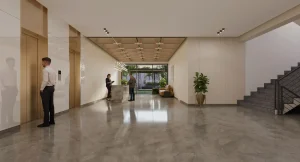
Walking into Bill Gates house feels like stepping into the future. The mansion is equipped with a high-tech sensor system that monitors climate, lighting, and music in every room. Guests receive a wearable pin upon arrival, allowing them to customize temperature and lighting preferences. As they move through the house, sensors adjust the environment to match their settings. Hidden speakers behind wallpaper create a seamless audio experience, letting music follow you from room to room. This level of automation was revolutionary when the house was built in the 1990s and remains cutting-edge today.
The walls themselves are a work of art—literally. Instead of traditional paintings, Bill Gates house boasts $80,000 worth of computer screens that display artwork, photos, or videos at the touch of a button. The storage system for these digital displays alone cost $150,000, showcasing Gates’ love for innovation and aesthetics. One of the mansion’s crown jewels is the private library, which houses the Codex Leicester, a 16th-century manuscript by Leonardo da Vinci that Gates purchased for $30.8 million in 1994. With its dome-shaped roof and oculus, the library is both a sanctuary for knowledge and a testament to Gates’ passion for history.
A Pool Like No Other
The 60-foot swimming pool at Bill Gates house is a standout feature. Housed in a 3,900-square-foot building, the pool features an underwater music system and a unique design that allows swimmers to move between indoor and outdoor sections via a glass wall. An underwater grate ensures a smooth transition without leaving the water. This isn’t just a pool—it’s an experience, blending luxury with technology to create a space that’s both functional and fun.
Home Theater
A private Art Deco-style theater seats 20 guests in plush comfort, complete with a popcorn machine for the ultimate movie experience.
Smart Technology
-
Every guest receives a pin that communicates with sensors throughout the house.
-
The pin adjusts lighting, temperature, and even music to each person’s preferences as they move from room to room.
-
Digital art screens worth $80,000 allow instant changes to the artwork displayed on the walls.
Security
-
Advanced security features include biometric access, high-tech sensors, and a private tunnel connecting the estate to the main road.
-
The house is also earthquake-proof, ensuring safety in any situation.
Spaces for Entertainment and Fitness

The Reception Hall: Grand Gatherings in Style
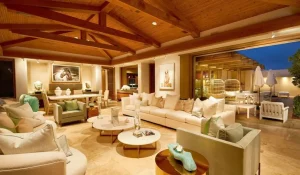
Imagine hosting 200 guests in a 2,300-square-foot reception hall with a 6-foot-wide limestone fireplace and a 22-foot-wide video screen. That’s the reality at Bill Gates house. The hall, designed for lavish dinner parties or cocktail events, can seat up to 150 people comfortably. Its grandeur is matched only by its versatility, making it perfect for everything from charity galas to family gatherings. The six kitchens scattered throughout the mansion ensure that staff can cater to any event, no matter the scale.
Fitness Facilities Fit for a Billionaire
Fitness enthusiasts will envy the 2,500-square-foot gym in Bill Gates house. Paneled with mountain stone from the Pacific Northwest, the gym includes a sauna, steam room, and a trampoline room with a 20-foot ceiling—perfect for a fun, high-flying workout. Separate men’s and women’s locker rooms add a touch of practicality, ensuring privacy and comfort. Whether Gates is bouncing on the trampoline or relaxing in the sauna, this space reflects his commitment to health and innovation.
Unique Touches That Set Xanadu 2.0 Apart

A Beach with Imported Sand
Bill Gates house sits on a lakefront property with a private beach, but the sand isn’t local—it’s imported annually from St. Lucia via barge. This luxurious touch ensures the beach remains pristine, adding a tropical flair to the Pacific Northwest setting. To prevent runoff issues, the estate features an artificial stream and estuary system that supports salmon and trout, blending environmental consciousness with extravagance.
A Tree with Its Own Caretaker
One of the quirkiest features of Bill Gates house is a 40-year-old maple tree by the driveway, which Gates loves so much that it’s monitored 24/7. Equipped with its own irrigation system, the tree receives water automatically if it gets too dry. This attention to detail highlights Gates’ appreciation for nature and his willingness to invest in even the smallest aspects of his estate.
A Guest House That Started It All
Before the main mansion was completed, a 1,900-square-foot guest house was built as a prototype for the technology used in Bill Gates house This guest house, complete with its own bedroom and bathroom, served as a testing ground for the smart home systems that would later define Xanadu 2.0. Gates even wrote much of his 1995 book, The Road Ahead, in this space, making it a historic part of the estate.
Unique Facts & Hidden Details
-
Favorite Tree: Bill Gates has a 40-year-old maple tree on the property, monitored and watered electronically every 24 hours.
-
Secret Bar: The library’s hidden bookcase opens to reveal a private bar.
-
Private Tunnel: A tunnel provides discreet access from the main road to the house.
-
Imported Beach Sand: The private beach’s sand is imported annually from the Caribbean.
-
Art Collection: The digital art system allows for instant updates to the mansion’s artwork, keeping the atmosphere fresh and inspiring.
The Environmental Edge of Xanadu 2.0
Sustainability at Its Core
Bill Gates house isn’t just about luxury—it’s a model of eco-friendly design. The earth-sheltered structure, combined with tall trees planted around the property, helps regulate heat and reduce energy use. The use of sustainable materials like Douglas fir and a focus on earthquake-resistant construction further enhance the mansion’s environmental credentials. Gates’ commitment to sustainability extends beyond his home, as seen in his work with the Bill & Melinda Gates Foundation, which funds projects like Golden Rice to combat global issues like vitamin A deficiency.
A Blueprint for the Future
The technology in Bill Gates house has inspired countless smart homes worldwide. From automated climate control to digital art displays, Xanadu 2.0 was a pioneer in home automation, setting trends that are now standard in luxury residences. By blending sustainability with innovation, Gates has shown how wealth can be used to create spaces that are both luxurious and responsible.
The Man Behind the Mansion


A Legacy of Innovation
Bill Gates, born on October 28, 1955, in Seattle, Washington, is best known for co-founding Microsoft with Paul Allen in 1975. His vision of a computer on every desk revolutionized the tech industry, making him the world’s richest person for 18 years between 1995 and 2017. Today, with a net worth of $115.1 billion, Gates is equally renowned for his philanthropy through the Bill & Melinda Gates Foundation, which has donated over $60 billion to global health, education, and poverty alleviation.
A Home Reflecting His Values
Bill Gates house mirrors the man himself: innovative, forward-thinking, and committed to making a difference. Every feature, from the high-tech sensors to the eco-friendly design, reflects Gates’ belief in using technology to improve lives. His purchase of the Codex Leicester and his focus on sustainable architecture show a man who values knowledge, beauty, and responsibility in equal measure.
Conclusion: A Mansion Like No Other
Bill Gates house, Xanadu 2.0, is more than a home—it’s a testament to what’s possible when wealth, vision, and technology collide. From its eco-friendly Pacific Lodge design to its futuristic automation, every corner of this 66,000-square-foot mansion reflects Gates’ commitment to innovation and sustainability. Whether it’s the underwater music in the pool, the digital art on the walls, or the tree with its own caretaker, Bill Gates house is a marvel that continues to captivate and inspire.
FAQs About Bill Gates House
How much did it cost to build Xanadu 2.0?
The construction of Bill Gates’ house cost $63 million over seven years, with the property valued at over $145 million today. Annual property taxes exceed $1 million.
What is the most unique feature of Bill Gates’ house?
The high-tech sensor system, which adjusts lighting, temperature, and music based on a guest’s wearable pin, is one of the most innovative features, making the house a pioneer in smart home technology.
Is Bill Gates house eco-friendly?
Yes, the mansion is earth-sheltered, uses sustainable materials like Douglas fir, and incorporates energy-saving features like tree cover to regulate heat, making it a model of eco-conscious design.
Does Bill Gates still live in Xanadu 2.0?
Yes, as of 2025, Bill Gates resides in Bill Gates house, Xanadu 2.0, in Medina, Washington, where he continues to innovate and inspire from his tech-savvy home.
For those fascinated by luxury real estate and cutting-edge technology, FameHouseWorld invites you to marvel at this architectural gem that redefines modern living.
Checkout our last update on “Hobbit House Magic: 7 Reasons Why They’re So Popular“.