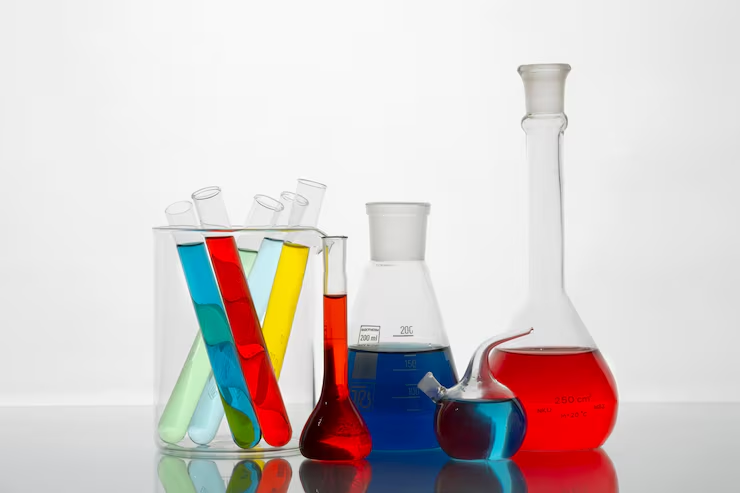
Lab equipment plays a crucial role in scientific research, medical testing, and educational experiments by enabling precise measurements and controlled conditions. It encompasses a wide range of tools, instruments, and devices designed to support accuracy and repeatability in laboratory work. Without reliable lab equipment, data quality and research outcomes can be compromised.
Researchers and technicians rely on equipment such as microscopes, spectrometers, centrifuges, and consumables to carry out diverse scientific tasks. The choice of lab tools often depends on the specific field, whether it be chemistry, biology, or clinical diagnostics, as well as the required precision and sample types.
With advances in technology, modern lab equipment now often integrates digital features for enhanced functionality and data management. Suppliers focus on delivering products that meet industry standards while supporting efficiency, making the selection of appropriate lab instruments a key factor in successful scientific endeavors.
Types of Lab Equipment
Laboratories use various pieces of equipment designed for precise scientific work. These tools serve distinct roles, from analyzing substances to measuring volumes and conducting specialized experiments. Understanding each type helps ensure proper selection and use.
Analytical Instruments
Analytical instruments are essential for identifying and quantifying chemical and physical properties in samples. Common devices include spectrophotometers, which measure light absorbance to determine concentration, and chromatographs, used for separating mixtures into components.
They often require calibration to maintain accuracy. These instruments provide critical data in fields like chemistry, biology, and materials science. Advanced models may offer digital readouts and software integration to streamline analysis.
Proper maintenance and user training are necessary to avoid errors. Analytical instruments contribute significantly to laboratory precision and reliability.
Basic Glassware
Basic glassware consists of containers and vessels that are fundamental in labs for holding, mixing, heating, and storing liquids. Standard items include beakers, flasks (Erlenmeyer and volumetric), test tubes, and pipettes.
Glassware must be heat-resistant and chemically inert. This allows safe handling of solvents, acids, and bases. Volumetric glassware, such as burettes and volumetric flasks, is designed for precise volume measurements.
Durability and cleanliness are important to avoid contamination that could affect results. Glassware is often chosen for visibility and resistance to chemical reactions.
Measuring Devices
Measuring devices ensure accurate quantification of variables like volume, mass, temperature, and pH. Common tools include balances for weighing, thermometers for temperature, and pH meters for acidity.
Precision is critical for reproducible results. Digital balances offer high accuracy down to micrograms. Temperature control instruments may range from simple mercury thermometers to digital probes.
Calibration against standards is necessary for all measuring devices. Correct usage minimizes variability in experimental data.
Specialized Apparatus
Specialized apparatus covers equipment designed for specific types of laboratory work. Examples include centrifuges for separating substances by density and autoclaves for sterilizing tools and media.
Microscopes, essential for biology and materials research, also fall into this category. Some devices incorporate automation and computer control for efficiency.
These tools often require specific operational knowledge and safety precautions. Specialized apparatus enhances the capabilities of a lab beyond routine tasks, supporting advanced research and diagnostics.
Proper Use and Maintenance
Effective use and upkeep of laboratory equipment require attention to accuracy, cleanliness, and organized storage. Regular procedures ensure equipment functions correctly, extends its service life, and maintains safety standards.
Calibration Procedures
Calibration is essential for ensuring measurement accuracy. It involves adjusting equipment to match recognized standards, reducing errors in data collection.
Calibration should be performed regularly, following the manufacturer’s schedule or more frequently if the equipment is used intensively. Use certified reference materials or standards specific to the device. Keep detailed records of calibration dates, methods, and results to track performance over time.
Calibration checks often include zeroing instruments, verifying scale accuracy, and adjusting sensors. Neglecting calibration risks unreliable results and possible safety hazards.
Cleaning Techniques
Proper cleaning removes contaminants that can interfere with experiments or damage equipment. Cleaning frequency depends on the type of equipment and the substances it contacts.
Use appropriate cleaning agents that do not corrode or degrade surfaces. For glassware, solvents or detergents are common; electronic parts require gentle wiping with lint-free cloths or recommended solvents. Avoid harsh abrasives.
Clean surfaces immediately after use to prevent residue buildup. Follow safety protocols, including wearing gloves and proper disposal of waste. Document cleaning routines to ensure consistency and compliance.
Storage Guidelines
Correct storage protects equipment from damage and environmental factors like moisture, dust, and temperature fluctuations.
Store fragile items in padded compartments or dedicated racks. Keep instruments in a dry, ventilated area away from direct sunlight. Label storage areas clearly to facilitate easy access and inventory management.
Use covers or cases for sensitive devices when not in use. Proper storage reduces maintenance needs and prevents accidental damage or contamination.